
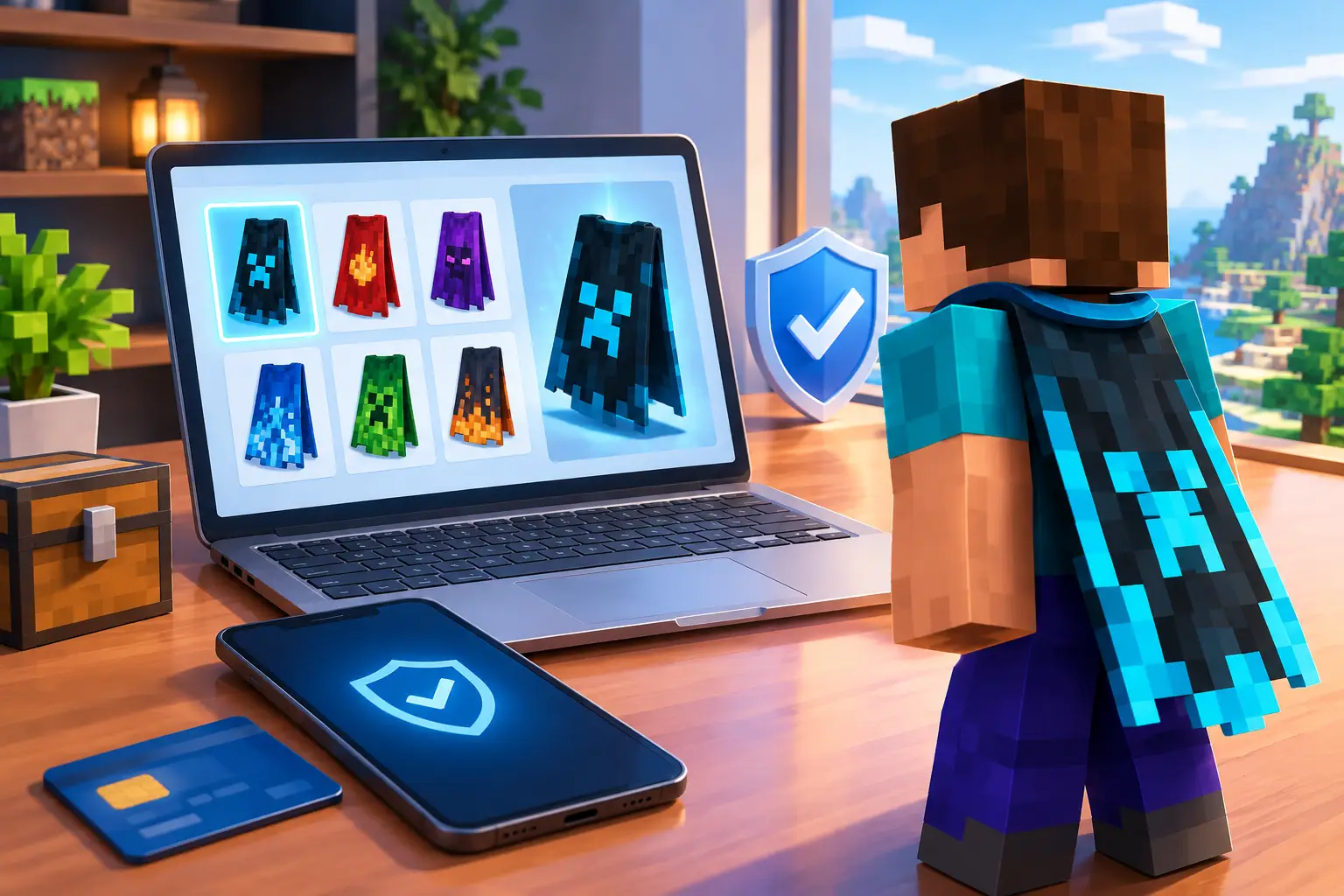
A rare cape is more than a cosmetic. It is one of the clearest signals that a player has history, taste, or serious collector instincts. That is exactly why the decision to buy Minecraft cape codes deserves more care than a typical in-game purchase. In a market full of screenshots, vague promises, and account-selling offers, the difference between a legitimate collectible and a costly mistake often comes down to what is actually being sold.
The goal is simple: receive an official, unredeemed cape code, redeem it to your own account, and keep control of your Minecraft identity from start to finish. Here is what to look for before you commit to a rare cape.
Before You Buy a Minecraft Cape, Know the Product
A cape code and a Minecraft account are not the same product. A legitimate cape code is a redeemable digital code that can be applied to the buyer’s own eligible Minecraft or Microsoft account through the appropriate official redemption process. Once redeemed successfully, the cape becomes part of that account’s cosmetic history.
An account with a cape already attached is a completely different situation. It may look like a shortcut to ownership, but it can carry major risks. Account recovery, changed credentials, disputed ownership, and platform policy issues can all turn a rare cosmetic into a temporary rental. Even if the seller appears trustworthy, you are relying on someone else’s account history rather than securing the cape on your own account.
For collectors, code-based ownership is the cleaner path. You receive the item, complete the redemption yourself, and avoid handing your Minecraft identity to a stranger. It also makes the purchase easier to document and manage as part of a larger collection.
Not every cape has identical eligibility or redemption details. Some are tied to specific events, promotions, platforms, or redemption windows. Read the listing closely and make sure you understand what the code represents before checkout. Rarity is exciting, but a cape only has value to you if it can be redeemed as described.
Why Verification Matters More Than a Low Price
Cape codes are digital goods. There is no physical package to inspect and no easy way to judge authenticity from a polished photo. That makes verification the center of a safe purchase.
A seller should be clear that the listing is for an official redeemable code, not an account login, a shared code, or a vague promise of future delivery. The product description should identify the cape accurately and explain delivery expectations. If the listing uses fuzzy wording such as “cape access,” “guaranteed method,” or “account included,” slow down and ask what you are actually receiving.
Price alone is not proof of a deal. An unusually cheap rare cape can be a warning sign, especially when the seller pushes cryptocurrency, direct messages, gift cards, or payment methods with no buyer record. Collectible markets attract urgency. Scammers know that players who fear missing out may skip the questions they would normally ask.
A specialist marketplace earns trust by verifying listings before they go live, presenting the item clearly, and keeping a record of the order and fulfillment. At MineCapes.gg, that collector-first approach matters because the transaction is built around official cape codes, secure checkout, and tracked digital delivery rather than informal promises in a chat window.
What a Safer Cape Purchase Looks Like
The best purchase experience is not complicated. It gives you enough information to make a decision, a secure way to pay, and a clear path from checkout to redemption.
Start with the listing. Confirm the exact cape name, what form of code is being sold, and whether the description calls out any known eligibility details. If you are buying a gift, be especially careful: the recipient should know whether they can redeem the code on their own account and whether there are any timing considerations.
Next, look at the checkout process. Secure card processing through an established payment provider is a far better signal than a seller asking you to send money directly. A legitimate storefront should generate an order record and send delivery details to the email address used at checkout. That paper trail matters if you need help locating the code, confirming the purchase, or resolving a delivery issue.
Finally, consider support before buying, not only after something goes wrong. Digital delivery can be fast, but email filters, typos, and redemption questions still happen. A marketplace that can help diagnose a missing delivery email or explain the next redemption step gives you a much better experience than a one-person reseller who disappears after payment.
Redemptions: Move Carefully, Then Move Quickly
When your code arrives, treat it like a high-value digital collectible. Do not post it in a screenshot, paste it into a public chat, or share it with friends “just to check it.” A code can only be redeemed once, and exposure is enough for someone else to claim it first.
Use the official redemption route specified for that code and make sure you are signed into the correct account before submitting anything. Players with multiple Microsoft accounts should pause here. Redeeming to the wrong account can be frustrating because a successful redemption may not be reversible.
After redemption, save your confirmation email and order details. Take a private screenshot of the successful result if one is shown. This is not about making the process dramatic. It is basic collection hygiene. The same players who track the origin and rarity of a cape should also keep a clean record of when and where it was acquired.
Visibility can vary depending on the cape and Minecraft environment you use. If you do not see the cosmetic immediately, do not assume the code failed. Check the official appearance or skin settings associated with your account, confirm that you are logged into the correct profile, and allow time for services to update. If there is still an issue, contact the seller’s support channel with your order information rather than repeatedly attempting unrelated redemption steps.
The Collector Value of a Legitimate Cape
Rare Minecraft capes hold attention because they are visible, limited, and tied to moments in the game’s community history. Some represent events, some promotions, and some periods that new players cannot simply recreate. Wearing one can be a quiet flex on a multiplayer server, but the appeal goes deeper for collectors.
A cape can mark the first time you attended an event, complete a themed skin, or give your account a recognizable identity that lasts beyond a single world or season. That personal value is why authenticity matters. A copied image or borrowed account may create the appearance of ownership, but it does not provide the same confidence as redeeming an official code to the account you actually play on.
There is also a trade-off worth acknowledging. The rarest capes can command higher prices, and no cosmetic is worth stretching beyond your budget. Buy because the cape fits your collection, your skin style, or your connection to Minecraft, not because a seller manufactured panic around a countdown timer. The strongest collections are intentional, not impulsive.
Red Flags That Should Stop a Purchase
A few signs should make you walk away, even when the cape itself is hard to find:
- The seller offers only an account instead of a redeemable code.
- Payment is requested through an irreversible method with no storefront checkout or order record.
- The listing cannot clearly name the cape, code type, or delivery process.
- The seller refuses reasonable questions about redemption, support, or proof of purchase.
- The price is dramatically below comparable offers and paired with pressure to pay immediately.
None of these signals alone can prove fraud, but together they create a risk that is not worth taking for a digital cosmetic. A rare cape should feel exciting at checkout, not uncertain.
The right cape becomes part of your account story the moment you redeem it. Choose a verified code, keep the transaction documented, and give yourself the confidence to wear it because it is truly yours.