
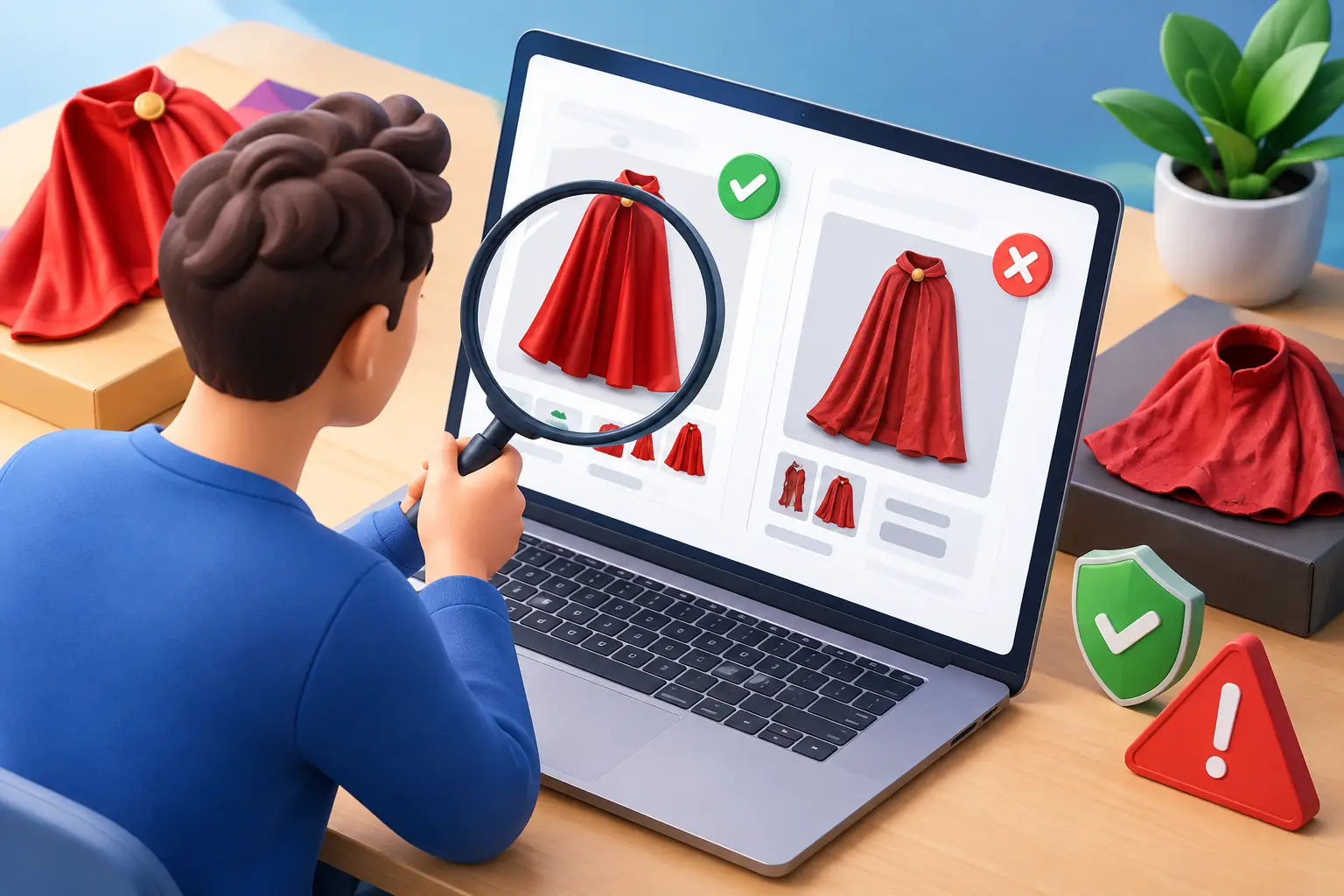
A rare Minecraft cape can change the look and status of an account instantly, which is exactly why bad actors build convincing offers around them. To spot counterfeit cape listings, look past the cape image and focus on the one thing that matters: whether the seller can deliver an official, unused code that redeems to your account.
A polished product page is not proof. Neither is a screenshot of a cape in-game, a low price, a countdown timer, or a seller claiming they have completed hundreds of deals in DMs. Cape collecting is a high-trust corner of Minecraft, and counterfeit listings are designed to rush buyers past the details that expose them.
Start With What Is Actually Being Sold
The first question is simple: are you buying a redeemable code, an account, or a vague promise of a cape? Those are not interchangeable.
An official cape code is intended to be redeemed through the proper Microsoft or Minecraft redemption flow. A legitimate listing should state this clearly and explain what you receive after payment. If the description only says “cape access,” “instant add,” “works on Java,” or “guaranteed cape,” without identifying a code and its redemption process, treat that as a major warning sign.
Some scam listings sell accounts that already wear a cape. That creates obvious problems: account recovery risk, unclear ownership, possible terms violations, and the possibility that the original owner takes the account back after you pay. Other listings promise a seller will “apply” the cape later. This is even worse. You should never need to give someone access to your Microsoft account to receive a legitimate code.
A clean offer identifies the item, the delivery method, and the buyer’s next step. Ambiguity is where counterfeit sellers operate.
How to Spot Counterfeit Cape Listings From the Details
Counterfeit listings often borrow real event names, real cape artwork, and real screenshots. The fraud is usually hidden in the terms, the provenance, or the delivery claim.
Watch for impossible cape and code claims
Not every Minecraft cape was distributed as a code. Some capes were granted directly to eligible accounts through events, migrations, or other account-based processes. A seller claiming to have unlimited “official codes” for a cape that was never issued that way is not offering a rare find. They are offering a story.
Be equally cautious with listings that claim a single code works for every edition, every platform, or every region with no restrictions. Redemption rules can differ by cape and promotion. A trustworthy seller does not erase those details to make the item sound easier to buy.
Before you purchase, compare the seller’s claims against the known origin of the cape. Ask: how was this cape originally distributed? Was it a code promotion? Is the code supposedly unused? Does the stated redemption method make sense for that specific item? If the seller cannot answer in plain language, do not fill in the gaps for them.
Treat stock photos as marketing, not evidence
A cape render, a Minecraft skin preview, or a screenshot from a cape gallery proves only that the cape exists. It does not prove the seller owns a redeemable code.
The same goes for blurred code images. A blurred card or email can be useful supporting evidence, but it is easy to reuse someone else’s photo. Evidence becomes more credible when it is specific to the transaction and paired with consistent listing details, an established storefront, and buyer protection.
Do not ask a seller to reveal the full code before purchase. That is not realistic or safe for either side. Instead, look for a platform that verifies inventory before publication and explains how it protects the code until delivery.
Read the delivery language closely
“Instant delivery” should mean the code arrives after successful payment, usually by email or through a clear order-delivery system. It should not mean you are told to wait for a Discord invite, message an unknown person, or provide your account login.
Counterfeit sellers frequently move buyers off-platform because they want to avoid payment protections and leave no reliable fulfillment record. If the listing directs you to pay through gift cards, crypto-only transfers, Cash App to a personal account, or a friends-and-family payment option, walk away. Those methods can make recovering funds nearly impossible.
Secure checkout through a recognized processor, an order confirmation, and a documented delivery trail do not guarantee that every transaction is perfect. They do give you a real path to support if something goes wrong.
Price Can Signal Risk, But It Is Not Proof
Rare capes have collector value because supply is limited, demand is real, and legitimate unused codes can be difficult to source. A price dramatically below the normal market range deserves scrutiny, especially when the seller says they have unlimited quantity or pressures you to buy before “stock disappears.”
That does not mean every affordable listing is fake, or every expensive listing is genuine. Sellers may price differently due to acquisition cost, demand, or a promotion. The issue is whether the price matches the full story. A supposedly scarce, high-demand cape with a bargain-bin price and no verifiable explanation is a classic bait offer.
Avoid the opposite mistake too: premium pricing is not authentication. Scammers know collectors associate a higher price with rarity. Verify the item and seller first, then decide whether the asking price makes sense for your collection.
Check the Seller’s Trust Signals as a System
One good signal is helpful. Several matching signals are much better. Look for clear item descriptions, visible policies, secure payment options, an understandable delivery process, and support that can address redemption questions.
A serious marketplace has an incentive to protect its reputation because one bad listing can damage buyer confidence across the entire catalog. At MineCapes.gg, listings are verified before publication and official cape codes are delivered by email after secure checkout, giving collectors a cleaner alternative to informal person-to-person deals.
Be cautious if a seller has no terms, no contact path, no explanation of code delivery, and no process for an invalid or already-redeemed code. A page filled with urgency but missing operational details is built to convert before you can think.
Reviews can help, but read them with the same collector mindset. A pile of generic comments such as “fast” or “legit” is weaker than feedback that mentions the specific purchase, delivery timing, and successful redemption. Reviews should support other evidence, not replace it.
Protect Your Account During Redemption
Even a real code can become a bad experience if you redeem it through the wrong page or share credentials with a stranger. Use official redemption channels, sign in only through trusted Microsoft or Minecraft prompts, and keep your account security active.
Never send your password, two-factor authentication code, recovery email access, or session token to a seller. A legitimate code purchase does not require any of them. If a seller says they need access to “verify compatibility,” “activate the cape,” or “sync your account,” stop the transaction.
After receiving a code, redeem it promptly according to the supplied instructions. Save your order confirmation and delivery email until the redemption is complete. If there is an issue, those records make it easier for legitimate support teams to investigate quickly.
Questions Worth Asking Before You Pay
If a listing still leaves you uncertain, ask direct questions before checkout. What exact cape code is being sold? Is it unused and officially redeemable? How will it be delivered? What happens if the code has already been redeemed or cannot be redeemed as described?
The response matters as much as the answer. A trustworthy seller will be specific without asking you to compromise your account or leave the protected checkout flow. A counterfeit seller may become evasive, push urgency, insist on private payment, or claim the question itself is suspicious.
Collectors do not need to chase every listing that appears. The best cape is one you can redeem confidently, keep on your own account, and enjoy without wondering whether the deal will disappear the moment the payment clears.