
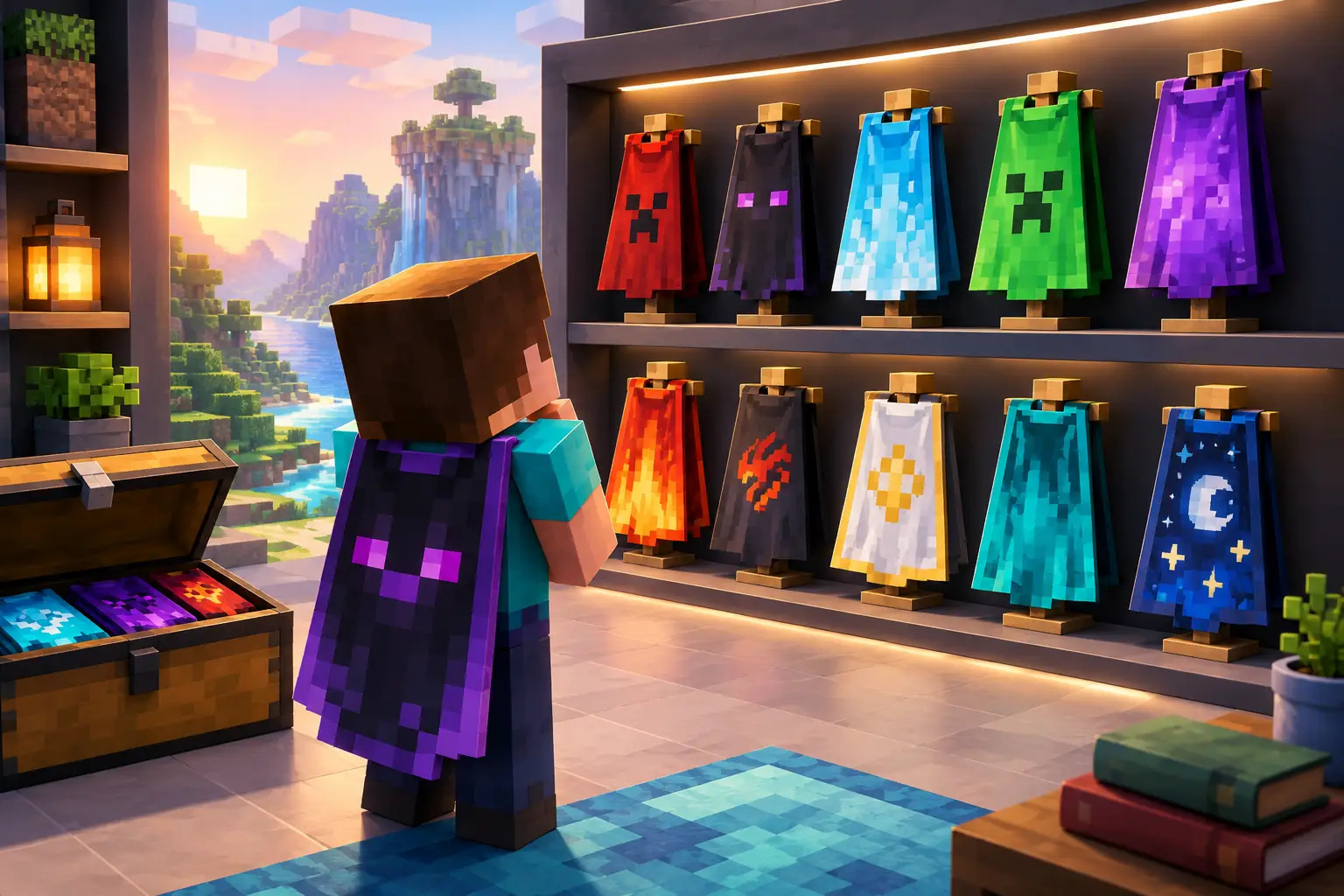
A search for minecraft cape buy usually starts with one question: is this cape actually real? For collectors, the cape itself is only half the value. The other half is knowing you are receiving an official, redeemable code – not a compromised account, a reused key, or a promise that disappears after payment.
Rare Minecraft capes carry real collector appeal because they are visible, limited, and tied to specific moments in the game’s history. Some came from events, some from promotions, and some are difficult to find simply because few unused codes remain. Buying one should feel like adding a verified piece to your collection, not taking a gamble in a Discord DM.
What a Minecraft Cape Buy Should Include
A legitimate cape purchase is centered on the code. You should know exactly what is being sold, how it will be delivered, and what redemption process applies before you check out. Clear listings matter because cape names, origins, eligibility, and availability can differ from one cosmetic to the next.
The strongest option is an official redeemable code delivered digitally, rather than access to someone else’s Minecraft account. Account sales create obvious problems: ownership can be disputed, recovery details can remain with the original holder, and the account may already carry restrictions you cannot see. A code, when valid and redeemed to your own account, keeps the cosmetic where it belongs – under your control.
Delivery also matters. Instant email delivery gives you a clean record of the transaction and lets you redeem while the purchase is fresh. If a question comes up, you should be able to reference the order details, the code delivery, and the marketplace’s support process without chasing down an anonymous seller.
Why Official Codes Matter More Than a Cheap Listing
The lowest price is not always the best deal in the cape market. A suspiciously cheap listing can signal a code that has already been redeemed, a code obtained through questionable means, or a seller who is offering something different from what the buyer expects. The cost of a bad purchase is more than the money lost. It can mean missed redemption windows, account-security headaches, and no real path to resolution.
Official codes have value because they are made to be redeemed through the proper Minecraft or Microsoft redemption flow associated with that promotion. That does not mean every code works in every situation forever. Redemption terms, regional considerations, account requirements, and promotion-specific rules can affect eligibility. A trustworthy seller presents the item accurately instead of pretending every cape has identical conditions.
For a serious collector, provenance is part of the product. You may care about the event behind a cape, its rarity, or whether it represents a legacy moment in Minecraft culture. That context helps you decide whether a cosmetic is a personal favorite, a status item for multiplayer, or a long-term centerpiece of your collection.
How to Buy a Minecraft Cape Without the Usual Risk
Start by reading the listing as closely as you would inspect a collectible. Confirm the cape name, that the item is an official code rather than an account, and whether the listing explains the expected redemption path. If the details are vague, treat that as a reason to pause rather than a reason to rush.
Next, look for a marketplace that verifies inventory before it is published. Verification does not remove every possible redemption variable, but it is a major difference between a specialized storefront and informal peer-to-peer selling. MineCapes.gg focuses on verified cape listings, secure Stripe checkout, instant code delivery by email, and support for delivery or redemption questions – the practical safeguards collectors should expect when buying digital goods.
Pay through a recognized secure checkout instead of sending crypto, gift cards, or person-to-person payments to an unknown seller. Those payment methods can be difficult or impossible to dispute if the seller vanishes. A professional payment flow gives the transaction a record and sets a higher standard for the seller handling your purchase.
Once the code arrives, keep the email and order confirmation. Redeem according to the instructions provided for that specific code, on the account where you want the cape to live. Do not share the code publicly, paste it into screenshots, or send it to someone who offers to “check” it for you. A cape code is the item. Treat it with the same care you would give any other valuable digital collectible.
Red Flags That Should Stop a Purchase
Some warning signs are easy to spot. Sellers who refuse to explain what they are delivering, pressure you into an off-platform payment, or promise access to a cape through an account transfer are asking you to accept unnecessary risk. So are listings that use blurred screenshots, copied descriptions, or vague phrases such as “works guaranteed” with no explanation of what is guaranteed.
Be especially careful with claims that a cape can be duplicated, transferred after redemption, or added to any account without an official code process. Rare capes are desirable precisely because access is limited. Claims that sound too convenient often skip the details that determine whether a purchase is legitimate.
A seller should not need your Minecraft password, Microsoft password, recovery email, or two-factor authentication code to sell you a redeemable cape code. If anyone requests those details, stop immediately. Your account security is separate from a code purchase.
Buying for Play, Gifting, or Collecting
The right cape depends on why you want it. A player buying for everyday use may prioritize a design they genuinely enjoy seeing in-game. A collector may be more interested in rarity, event history, or how difficult it is to locate an unused code. A gift buyer has one more job: make sure the recipient understands which account should receive the code and that the code should not be forwarded casually.
If you are buying a gift, avoid redeeming it on your own account first. Send the code securely to the recipient or print the delivery details only if you can keep them private. Digital codes are easy to share, but that also makes them easy to expose by accident.
Collectors should also decide their budget before browsing. The rarest cape is not automatically the best purchase for your collection. Sometimes a cape with a strong personal connection, a clean verified listing, and clear redemption information is the better choice than chasing a more expensive name because of hype.
The Difference Between Ownership and Access
A cape is tied to your Minecraft identity once it has been correctly redeemed, which is why buyers should focus on legitimate code-based access. You are not buying a screenshot, a skin pack lookalike, or temporary access to another person’s account. You are buying the opportunity to apply an official cosmetic to the account you control, subject to that code’s stated terms.
That distinction also makes the purchase easier to evaluate. Ask: What am I receiving? How is it delivered? What information supports authenticity? What happens if delivery is delayed or a redemption issue needs review? A credible marketplace should make those answers easy to find before your payment is complete.
Rare capes are one of the clearest ways to make a Minecraft account feel personal and recognizable. Buy the one you will be proud to wear, keep your code private until redemption, and choose a seller that treats authenticity like the main product – because for collectors, it is.