
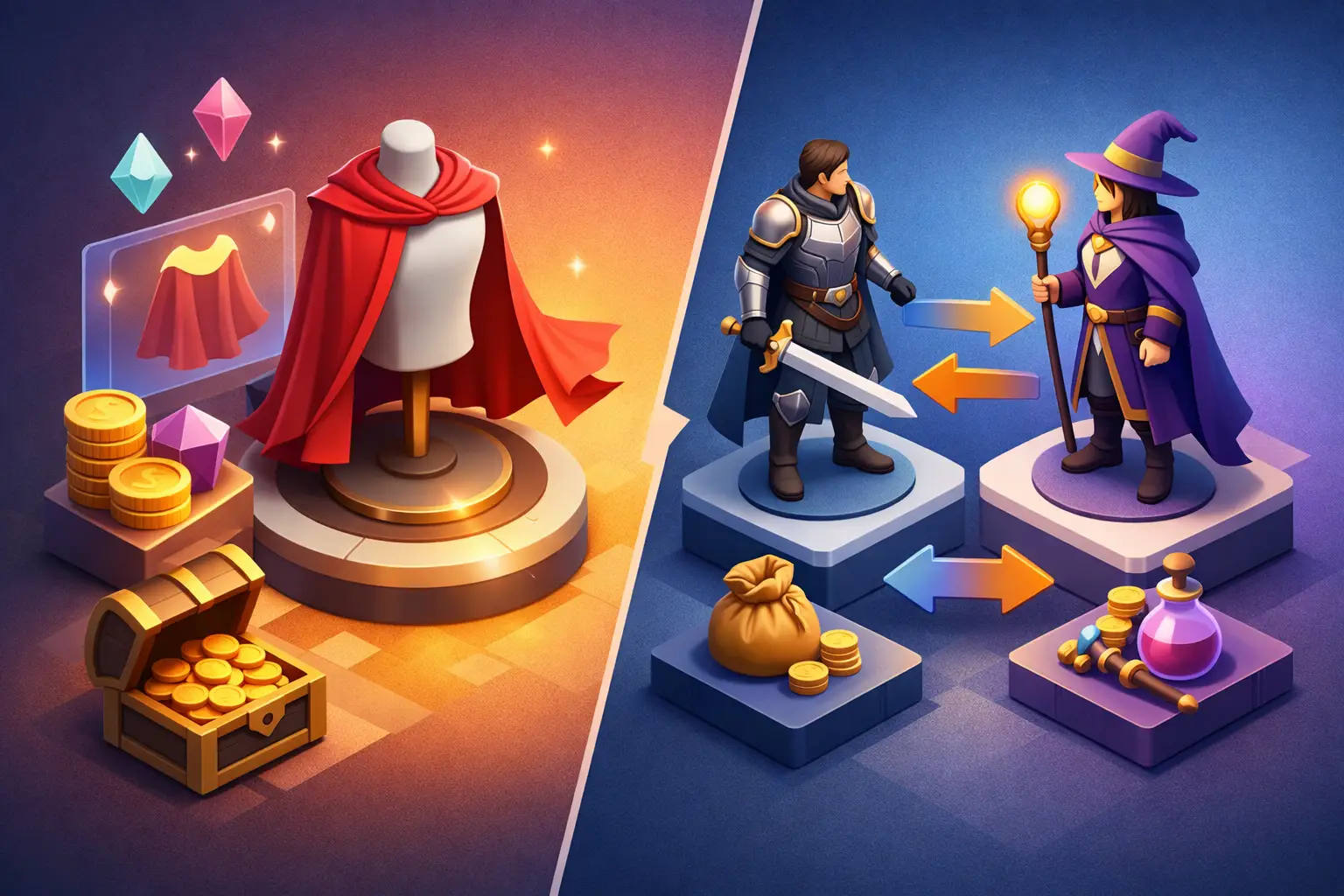
A rare Minecraft cape can change the way an account is recognized in a crowded lobby. That is why cape purchase versus player trading is not simply a question of price. It is a decision about account security, proof of legitimacy, delivery speed, and whether the item you are paying for can actually be redeemed by you.
For collectors, the wrong route can turn a highly anticipated cosmetic into a chargeback dispute, a lost account, or a code that has already been claimed. A verified cape purchase is built to reduce those risks. Player trading can still look tempting, especially when someone claims to have a deal that seems too good to miss, but the details matter far more than the screenshot.
What You Are Actually Buying
Before comparing the two options, separate a cape from the account wearing it. A Minecraft cape is a cosmetic tied to a Minecraft account after redemption. It is not normally an item you can remove from one account and send to another like an in-game stack of diamonds.
That distinction is where many informal trades become risky. A player may offer access to an account with a cape attached, promise to transfer an unredeemed code later, or show a cape in a screenshot and ask for payment first. Those are very different transactions with very different levels of protection.
A legitimate cape code, when available, gives the buyer a direct redemption path. You receive the code, redeem it to the intended account, and the cape becomes part of that account’s cosmetic history. The value is in the ability to redeem an official code yourself, not in a stranger’s promise that their account will remain yours after payment.
Cape Purchase Versus Player Trading: The Core Difference
The biggest difference is accountability. A specialized marketplace has a commercial reason to verify inventory, document fulfillment, process payments securely, and help when a delivery or redemption issue occurs. A private player trade usually depends on one person’s reputation, direct messages, and whatever evidence they choose to provide.
That does not mean every player-to-player seller is dishonest. Longtime community members can have real inventory and honorable intentions. The problem is that the buyer has to evaluate the seller, the code, the payment method, and the proposed delivery process all at once. One weak point can ruin the transaction.
A cape purchase through a verified storefront shifts more of that work away from the buyer. Instead of negotiating in chat, you can focus on the details that count: whether the listing is for an official redeemable code, how the code is verified before publication, when it will be delivered, and what support exists if something does not go as expected.
For a collector building a serious cape lineup, that structure is worth paying attention to. The goal is not merely to obtain a visual effect on a skin. It is to acquire a rare cosmetic with a clear, defensible redemption path.
Why Player Trading Creates More Risk
Private trading is fast when it works. A seller posts a cape offer, a buyer sends payment, and both sides claim the deal is done. But speed in the chat window does not equal safety after the payment clears.
The most common issue is unverifiable proof. Screenshots can be old, edited, borrowed, or disconnected from the code being sold. Even a real image of a cape does not prove that an unredeemed code exists. It only proves that someone, somewhere, had access to a cape on an account.
Account-based trades create another layer of risk. The original owner may retain recovery details, previous payment records, or other information connected to the account. If access changes later, the buyer can lose both the account and the cape attached to it. Account transfers can also conflict with platform rules, putting the purchase on unstable ground from the start.
Then there is payment protection. Informal sellers often request payment methods designed to be difficult to reverse. That may feel normal in collector communities, but it leaves buyers with limited options when a code fails, a seller disappears, or the item was misrepresented. A secure checkout does not guarantee every outcome, but it creates a documented transaction rather than a handshake deal in a message thread.
The Case for Verified Cape Codes
A verified code purchase is cleaner because it centers the transaction on the actual collectible. You are not buying temporary access to someone else’s profile. You are not waiting for a seller to decide whether to honor a promise after receiving payment. You are purchasing a code intended for redemption on your own account.
That matters for both players and gift buyers. If you are buying for yourself, you want control over the redemption process. If you are buying for someone else, you want a deliverable item that can be sent and redeemed without sharing passwords, account credentials, or sensitive information.
At MineCapes.gg, the appeal of a marketplace model is straightforward: listings are verified before they are published, checkout is processed securely, and code delivery is sent by email. That combination removes much of the uncertainty that defines casual player trading. It also gives buyers a clear record of what they purchased and when it was fulfilled.
Instant delivery is particularly useful when a cape is meant as a gift or when a buyer has already spent weeks watching the market. A rare code should not require days of awkward back-and-forth with a seller in another time zone. Once a legitimate purchase is complete, the next step should be redemption, not chasing updates.
When Player Trading May Still Make Sense
There are limited cases where a private trade can be reasonable. A buyer may know the seller personally, have extensive history with them, and be able to inspect the exact item and payment terms with confidence. Some collector communities also have established escrow practices and public reputation systems.
Even then, caution is part of the deal. Reputation is helpful, but it is not the same as verification. A seller with past successful trades can still make an honest mistake about a code’s status, receive a fraudulent code from someone else, or become unreachable when a problem appears.
If you decide to trade privately, treat it as a higher-risk transaction rather than a bargain by default. Never share your Minecraft login, email access, recovery details, or two-factor authentication codes. Ask exactly what is being sold: an unredeemed code, an account, or a claim to a future transfer. If the answer is vague, walk away.
A low price should also trigger more questions, not fewer. Rare capes carry collector value because supply is limited and demand is real. An offer that sits far below the market may be a genuine urgent sale, but it may also be priced to make you ignore the missing proof.
How to Judge a Cape Offer Before Paying
Whether you purchase through a storefront or consider a player trade, use the same collector mindset. First, confirm the cape type and the exact deliverable. A listing should make it clear whether you are receiving an official redeemable code and should not rely on vague language such as “cape access” or “guaranteed account.”
Next, look for a defined fulfillment process. You should know when and how the code will arrive, rather than being told to wait for a seller to message you later. Delivery by email creates a useful record and avoids dependence on a disappearing social account.
Then, consider what happens if the code has a problem. Rare digital collectibles are not ordinary retail goods, but legitimate sellers should still have a process for delivery questions and redemption support. Silence, pressure tactics, and a refusal to discuss basic transaction details are warning signs.
Finally, protect the account that will receive the cape. Redeem only through the official redemption flow associated with the code. Do not enter account credentials on a page sent by a private seller, and do not let anyone “redeem it for you.” A code is valuable because it lets you claim the cape yourself.
Choose Control Over Conversation
Player trading is built on trust between individuals. A verified cape purchase is built on a process. For a low-value casual cosmetic, some buyers may be comfortable accepting the uncertainty of a private deal. For a rare Minecraft cape with lasting collector appeal, the safer choice is usually the one that gives you proof, secure payment, direct delivery, and control of redemption.
The best cape purchase is not the offer that creates the most hype in a chat server. It is the one that leaves the cape where it belongs: redeemed on your account, with no loose ends attached.