
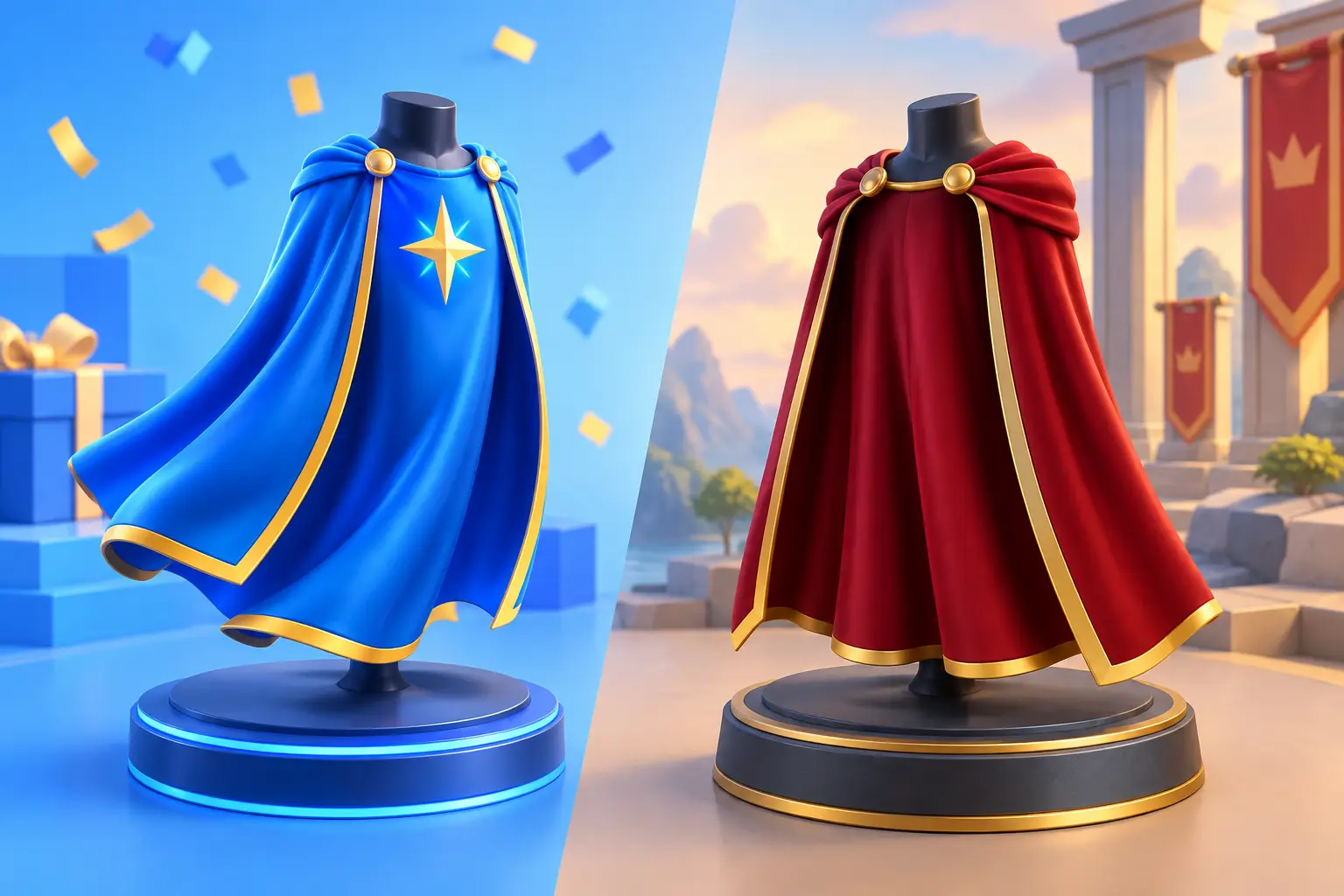
A cape can change how a Minecraft account is perceived before you place a single block. Some capes signal that you showed up for a specific moment. Others prove your account carries a piece of Minecraft history. That is the real distinction in event capes versus legacy capes: one is tied to participation, while the other is tied to age, eligibility, or a past chapter that may never return.
For collectors, the better choice is not always the rarer-looking one. It depends on what you value most: a clean redemption path, historical prestige, personal meaning, or a cape that turns heads in a crowded server lobby.
Event Capes Versus Legacy Capes: The Core Difference
Event capes are connected to a defined campaign, convention, livestream, anniversary, community milestone, or other limited-time activation. Their identity comes from the event itself. If you attended, participated, met the requirements, or redeemed an official code during the eligible window, the cape becomes a digital record of that moment.
Legacy capes are older capes with significance rooted in Minecraft’s history. They may have been granted to early players, specific account groups, contributors, migration participants, or people who qualified under rules that are now closed. A legacy cape does not need a recent event to feel exclusive. Its value is built on the fact that the original opportunity has passed.
The categories can overlap. An event cape from years ago can become a legacy collectible over time, especially if its official redemption codes are exhausted or its distribution was unusually limited. Still, the labels help buyers understand the source of a cape’s appeal: event capes are often about a moment; legacy capes are usually about permanence and provenance.
Why Event Capes Attract Collectors
A strong event cape gives an account a visible connection to a recognizable Minecraft moment. The design might reference a celebration, a creator initiative, a community program, or a special release. That context matters. Players who know the story behind the cape often recognize it immediately, which gives the cosmetic social value beyond its artwork.
For buyers, event capes can also offer a clearer route into rare cosmetics when official redeemable codes remain available. A verified code is a straightforward proposition: confirm the listing, complete secure checkout, receive the code by email, and redeem it through the official process. That is very different from taking over an account or trusting a stranger’s screenshot in a private message.
But an event label alone does not guarantee extreme rarity. Some events have broad participation, long claim windows, or large code distributions. Those capes may still look great and carry genuine history, yet they will not necessarily have the scarcity profile of a tightly controlled release. Collectors should separate “limited-time” from “limited quantity.”
What gives an event cape value
Event cape value usually comes from four factors: how well known the event was, how hard eligibility was to meet, how many codes or grants existed, and whether unused official codes can still be found. A cape from a short, high-profile campaign with restricted access has a very different collector profile than one available to a huge global audience for months.
Design plays a role, too. A visually distinct cape can stay desirable even when it was not the rarest release. Minecraft cosmetics are status items, but they are also part of a player’s identity. Some collectors buy for historical scarcity; others want the cape they are excited to wear every session.
Why Legacy Capes Carry Different Prestige
Legacy capes are difficult to reproduce because the original qualification conditions are over. You cannot go back and become an early adopter, attend a long-finished gathering, or meet a discontinued eligibility rule. That closed door is what creates their aura.
The most respected legacy capes tend to have a clear story. Maybe they were connected to an early era of Minecraft, a contributor community, or a historical account milestone. Their ownership can signal longevity in the game, even when the current holder acquired a valid, official code later through a collector marketplace.
That prestige comes with a trade-off: legacy capes can be harder to evaluate and harder to obtain safely. The older and more desirable the cape, the more likely buyers are to encounter misleading claims, fake code images, account-selling offers, or listings that cannot prove redemption legitimacy. Scarcity attracts demand, and demand attracts bad actors.
Legacy does not automatically mean better
A legacy cape may be historically stronger than an event cape, but “better” depends on your collection. If your goal is to own a piece of early Minecraft culture, legacy is the obvious lane. If you want a cape with a design or event story that means something to you, an event cape may be the purchase you enjoy more.
There is also a practical difference between collecting an account-bound historical item and collecting a redeemable code. A code-based purchase can offer a more direct ownership experience because you redeem it to your own account. That distinction matters to buyers who want their cosmetic collection attached to the account they actively use, rather than accepting the risks and limitations of account transfers.
Rarity, Availability, and Price Are Not the Same Thing
Collectors often use these terms interchangeably, but they measure different things. Rarity is about how many valid cape claims exist. Availability is about how many legitimate purchase opportunities exist right now. Price reflects market demand, buyer confidence, condition of the code, and seller trust alongside rarity.
A very rare legacy cape can be unavailable because no legitimate redemption route remains. An event cape may be less rare overall but highly sought after because verified, unused codes are scarce. Conversely, a cape with a tiny original distribution may not command the highest price if few players recognize it or want its design.
This is why purchase decisions should not be based on a single rarity claim. Ask what the cape was issued for, whether the code is official and unredeemed, and whether the seller provides a credible fulfillment process. The answer tells you more than a vague “super rare” label ever will.
Choosing the Right Cape for Your Collection
Start with the story you want your account to tell. A collector focused on Minecraft history may prioritize legacy capes with documented origins and long-term prestige. A player who wants a recognizable statement piece may favor event capes connected to a favorite moment, community, or release.
Then consider your risk tolerance. A lower-profile cape from a verified source can be a smarter addition than a supposedly elite collectible offered through an unverified channel. The goal is not just to find a desirable cape. It is to receive a valid code, redeem it successfully, and keep the cosmetic on the account you control.
At MineCapes.gg, the collector-first approach centers on verified listings, Stripe-secured checkout, instant code delivery by email, and support if redemption or delivery needs attention. Those details matter because a cape purchase is only as good as the legitimacy behind it.
What to Check Before You Buy
Before committing to an event or legacy cape, verify the exact cape identity and its original release context. Similar names, unofficial mockups, and recycled images can confuse even experienced buyers. Confirm whether you are buying an official redeemable code, not an account login or an informal promise that someone will transfer something later.
Also check the redemption status and process. An unused code should have a clear, official redemption path. If a seller cannot explain how fulfillment works, avoids questions about authenticity, or pushes payment methods with no buyer protection, treat that as a warning rather than a bargain.
Finally, buy for more than resale speculation. Cape markets can move with availability, community attention, and changes in how players value particular releases. The most satisfying collections are built around capes you genuinely want to own and wear.
A great cape is not simply the one with the highest asking price. Choose the one whose history, design, and verified path to your account make it worth keeping long after the purchase confirmation arrives.