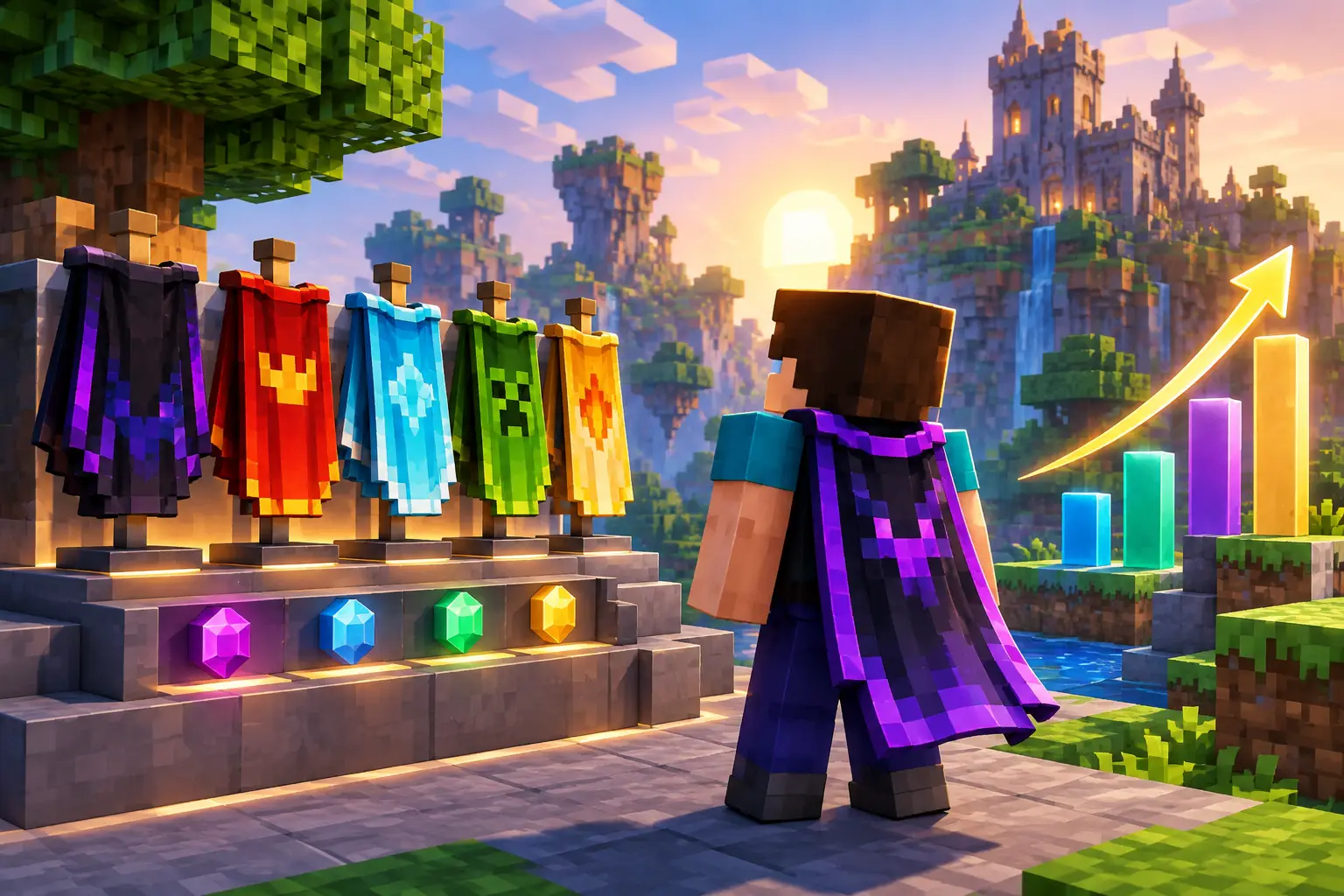
A cape can change the way a Minecraft account is recognized before a player says a word. That is why minecraft exclusivity trends matter far beyond cosmetics: they shape collector demand, influence perceived status, and determine which items stay memorable long after an event ends.
For collectors, the appeal is not simply having a cape. It is owning one with a clear story, limited availability, and a legitimate path to redemption. As more players treat digital cosmetics as part of their online identity, the difference between common access and genuine scarcity has become much sharper.
Exclusivity Is Now Part of Minecraft Identity
Minecraft has always rewarded self-expression. Skins, usernames, builds, and server reputations all create a player’s identity. Capes sit in a different category because they are visible, recognizable, and usually connected to a specific moment in Minecraft history.
A rare cape can signal that someone attended an event, supported a particular release, participated in a campaign, or secured a limited code while it was available. That context creates prestige. Two capes may look equally good from a design standpoint, but the one tied to a short redemption window or a notable event often carries more collector interest.
This is the core shift behind modern exclusivity trends. Players are not only choosing cosmetics for appearance. They are paying attention to provenance, supply, redemption status, and whether the item can still be acquired through an official code.
Why Certain Capes Become More Desirable
Scarcity alone does not automatically create lasting demand. A cape needs a reason for collectors to care. Usually, that reason comes from a combination of limited supply, recognizable design, and a story that feels meaningful within the Minecraft community.
Event history creates collector value
Event-related capes tend to attract attention because their availability was tied to a moment that cannot be repeated. A convention, promotion, anniversary, or partner campaign may have been active for only a limited period. Once the window closes, players who missed it cannot simply earn the same cosmetic through normal gameplay.
The more clearly a cape is connected to that moment, the more it can function as a digital collectible. This does not mean every old cape will rise in demand. It means collectors often prioritize capes with a distinct origin over cosmetics that were broadly available for an extended period.
Visible designs hold attention
Some capes are rare but relatively understated. Others are instantly recognizable from across a multiplayer lobby. Design matters because capes are social cosmetics. A bold pattern, a clean icon, or a well-known color combination can keep a cape desirable even among players who are not deep collectors.
The strongest demand often appears where rarity and visual appeal overlap. An exclusive cape that also looks great in-game has two audiences: collectors who value its history and players who want a standout cosmetic.
Redeemable codes have a different appeal
An unredeemed official cape code is not the same thing as an already-used cosmetic on someone else’s account. Collectors often prefer codes because they can redeem the cape to their own eligible account and retain control over the process.
That distinction matters for trust as well. Account trading can introduce serious risks, including recovery claims, access disputes, and platform-rule concerns. A legitimate, unredeemed code offers a cleaner ownership path for buyers who want the cape attached to an account they already use.
The Supply Story Matters More Than Hype
Cape conversations can get loud fast, especially when a design starts appearing in collector circles or on social media. But the best buying decisions are not based on hype alone. They are based on understanding why supply is limited and whether that limitation is real.
A cape distributed to a small group under a brief, documented promotion has a different scarcity profile than one offered widely for months. Likewise, a code with a known expiration date may become harder to find as the redemption deadline approaches. Availability can tighten quickly when collectors, gift buyers, and longtime players are all competing for the remaining valid inventory.
At the same time, low visibility is not always the same as low supply. Some capes are simply less discussed. Before treating any cosmetic as a major collectible, look at its release context, code status, design recognition, and the credibility of the seller offering it.
The Shift From Flexing to Curating
Early cosmetic demand often revolves around flex value: players want the item that gets noticed immediately. That is still part of the market, but a more collector-driven mindset has developed alongside it.
Many buyers now build a collection around themes. They may look for legacy designs, event capes, promotional releases, or cosmetics connected to a period when they first started playing. In that sense, a cape collection can be personal rather than purely status-driven.
This shift makes authenticity even more important. A collector does not just want the appearance of rarity. They want the real item, with a verifiable history and a secure redemption experience. The value is in knowing the cosmetic is legitimate, not in taking a chance on a questionable listing because the price looks tempting.
How Exclusivity Changes Buying Behavior
Minecraft cape buyers are becoming more selective. Instead of searching only for the lowest price, serious buyers increasingly consider four practical questions:
- Is this an official, redeemable code rather than account access?
- Has the listing been checked for validity and stated accurately?
- Will the code arrive quickly enough to redeem without unnecessary delay?
- Is support available if there is a delivery or redemption issue?
These details may sound transactional, but they protect the collector experience. A rare code is only valuable to the buyer if it can be delivered safely and redeemed correctly. The more exclusive the cape, the less room there is for uncertainty.
That is why a specialized marketplace can be preferable to informal peer-to-peer deals. Verification, secure checkout, tracked fulfillment, and clear support are not extras in this category. They are part of what makes a high-value digital purchase feel credible.
Scarcity Does Not Mean Guaranteed Appreciation
It is tempting to talk about rare capes like traditional investments, but that framing misses the point for most players. Demand can change. New releases can shift attention. A cape that is highly discussed one month may receive less interest later, while an overlooked event cosmetic can become more sought after as its history gains recognition.
The better approach is to buy with a collector’s mindset. Choose a cape you genuinely want to own and wear. Consider its origin, design, remaining code availability, and relevance to your personal Minecraft story. If demand grows over time, that may add to the satisfaction, but it should not be the only reason to buy.
It also depends on your goal. A player looking for a clean, recognizable cape may prioritize design and immediate redemption. A long-term collector may care more about event history and code condition. A gift buyer may value simple checkout and instant email delivery above deep market analysis. Each is a valid reason to care about exclusivity, but each leads to a different best choice.
What Collectors Should Watch Next
The next phase of Minecraft exclusivity will likely be shaped by how brands and communities distribute cosmetics. Short campaigns, creator partnerships, regional events, anniversary drops, and time-limited code offers all have the potential to create future collector pieces.
The strongest signal is not noise around a launch. It is a clear reason the item exists, a limited and understandable distribution method, and a design players will still want to wear after the campaign ends. When those factors align, collector interest tends to last longer.
For buyers, timing matters. Waiting can make sense when you are comparing listings or deciding whether a cape fits your collection. But when a verified official code has limited remaining availability, hesitation can mean missing the redemption opportunity entirely.
Buy the Cape, Not the Risk
Exclusivity should make a cape more exciting, not make the purchase more stressful. Prioritize legitimate redeemable codes, clear listing details, secure payment, and sellers that understand the difference between a rare cosmetic and a risky account transaction.
MineCapes.gg is built around that collector-first standard, with verified cape listings, secure Stripe checkout, and code delivery by email. The goal is simple: spend your time choosing the cape you want, not worrying about whether it will arrive or redeem.
The best cape collections are not built by chasing every rumor. They are built one legitimate, meaningful cosmetic at a time – starting with the cape you will still be proud to wear when the next trend arrives.