
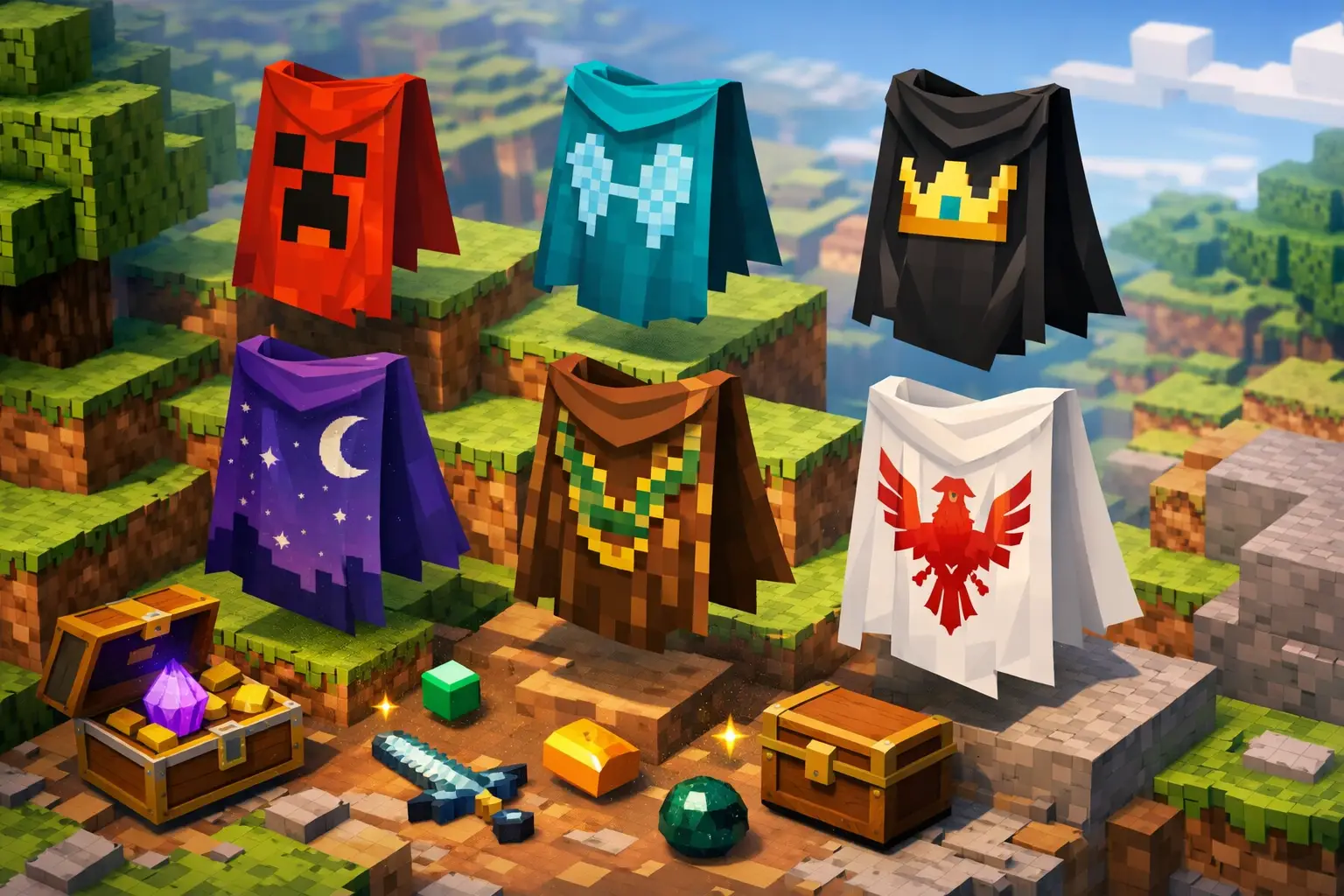
A cape is only a few pixels wide, but in Minecraft it can carry years of history. Searching for every Minecraft cape usually starts with a simple question: which ones exist? The real answer is more complicated. Some capes were tied to live events, some rewarded community work, some arrived through account milestones, and some were distributed as limited redemption codes. Their value comes from more than looks. It comes from how they were earned, how many players received them, and whether ownership can still change hands.
For collectors, the key distinction is between a cape that is permanently attached to an account and a cape code that has not been redeemed. That difference determines whether a cape is a display piece, a personal achievement, or a collectible that can still be acquired.
Every Minecraft Cape Is Not Sold the Same Way
There is no single, static public list that neatly captures every cape across Java Edition, Bedrock Edition, special promotions, internal Mojang awards, and temporary events. Minecraft has released capes through several systems over the years, and availability rules vary sharply between them.
The original Minecon capes are the names most collectors recognize first. Attendees at Minecon 2011, 2012, 2013, 2015, and 2016 received distinct designs linked to those events. These capes are legacy items, not modern store cosmetics. Once redeemed, they stay with the original account and cannot be moved to another player. Their rarity is real, but that also means any offer involving an already-redeemed Minecon cape requires extreme caution. Buying an account is not the same as owning a code, and account transfers can create security and ownership problems.
Other legacy capes were awarded for specific roles or contributions. The Mojang cape is associated with Mojang staff and selected former staff. The Cobalt and Scrolls capes relate to Mojang projects outside Minecraft. Translator, Moderator, Mojira Moderator, and Realms Mapmaker capes recognize work that supported the game and its communities. These are prestige capes, but they were never designed as general retail inventory. In most cases, they are account-bound and unavailable through legitimate code redemption.
That is why a collector should not treat every cape as a potential purchase. Some are historical records of participation. Others entered circulation as official, unredeemed promotional codes. The latter category is where a verified digital marketplace has a practical role.
The Major Types of Minecraft Capes
Minecraft cape collecting becomes much clearer when capes are grouped by how they were distributed instead of by color or design.
Event capes include Minecon designs and in-person promotional rewards. Their appeal is tied to a specific year, location, or moment in Minecraft history. Older event capes are especially recognizable because they cannot simply be reissued without changing their collector status.
Contributor capes include capes for Mojang employees, translators, moderators, bug-trackers, mapmakers, and other approved community contributors. These signal participation rather than purchasing power. They are often among the hardest capes to obtain because eligibility was selective.
Account and platform capes include rewards connected to account migration, ownership milestones, or official ecosystem programs. The Migrator Cape, for example, was issued to eligible Java players who completed the Mojang-to-Microsoft account migration within the qualifying period. The Vanilla Cape recognized players who owned both Java and Bedrock Edition under the relevant eligibility rules. These capes matter to longtime players, but they are attached to the account that earned them.
Promotional code capes are the collector category with the clearest path to legitimate ownership. Modern campaigns have included limited drops and official code-based rewards, such as the Twitch Follower’s Cape and TikTok Purple Heart Cape released during Minecraft’s 15th anniversary period. A code that remains unused can be redeemed on the buyer’s own eligible account. Once redeemed, it becomes account-bound, just like other capes.
Bedrock-focused capes add another layer. Some capes are linked to Bedrock Edition events, the Dressing Room, special character creator content, or promotions that do not work the same way on Java. The Founder’s Cape is a well-known example of a Bedrock-era collectible with a confusing availability history. Before buying any cape, confirm the edition, redemption method, region restrictions if any, and whether the cape appears on the platform where you actually play.
Why Certain Capes Become Collector Pieces
Scarcity alone does not make a cape valuable. A cape becomes desirable when scarcity meets recognition. Minecon capes are easy to identify and connected to a specific era, so they carry strong status. Contributor capes can be even rarer, but their value is more niche because many players do not know the backstory behind each one.
Code capes occupy a different lane. Their value depends on remaining supply. A promotional cape may have been claimed by a large number of players, yet still become harder to find once the campaign ends and unredeemed codes disappear. The exact design matters too. A bold, clean pattern that looks good with many skins can attract demand beyond the original event.
Collectors should also separate personal value from market value. A Migrator Cape can be priceless to the player who earned it during the account transition, even if it cannot be transferred. An unredeemed promotional code may have clearer market utility, but it does not replace the story attached to an earned legacy cape. Both are legitimate forms of Minecraft status, just with different ownership rules.
How to Check Whether a Cape Offer Is Legitimate
Cape scams thrive on confusion. The biggest red flag is an offer that promises to transfer a cape already attached to someone else’s account. Minecraft capes are generally tied to the account that redeems or receives them. There is no normal, secure process for moving a redeemed cape from one Microsoft account to another.
For redeemable code capes, verify what is actually being sold. You should know the cape name, the code’s official origin, the intended redemption flow, and whether it has been checked before listing. A seller who only provides a screenshot of a cape in-game has not proven that an unused code exists.
Secure checkout and traceable delivery also matter. Digital goods move fast, so buyers need a clear record of what was ordered and when it was delivered. Instant email delivery reduces waiting, but it should be backed by support that can help if a code fails, arrives late, or needs redemption guidance. MineCapes.gg focuses on verified official cape code listings for exactly this reason: authenticity is the product, not an afterthought.
Redeem Carefully and Keep Your Record
Once you receive a legitimate code, redeem it on the Microsoft account you intend to keep. Double-check the account before confirming. A successful redemption is usually permanent, which is excellent for ownership but unforgiving if you are signed into the wrong profile.
Save the purchase confirmation and redemption details after the cape appears on your account. They are useful for your own collection records and can help when troubleshooting a display issue. Then allow time for Minecraft services to sync. A cape may show differently between the launcher, Java Edition, Bedrock Edition, and third-party skin viewers.
Do not share an unused code in a public chat, screenshot, or support post. The first person to redeem it owns the reward. Treat it like a high-value digital collectible, because that is exactly what it is.
Build a Collection With a Clear Goal
The strongest cape collections are not always the largest. Some players chase Minecon history. Others focus on modern promotional codes, Bedrock exclusives, or capes that match a favorite skin. Setting a lane helps you judge whether a listing is meaningful to you instead of buying purely because the word rare is attached to it.
Start with the cape you will actually wear. A verified code gives you a clean path to permanent ownership on your own account, while the cape’s story gives it staying power long after the promotion ends. That is the collector advantage: not just owning a rare cosmetic, but knowing exactly why it belongs in your Minecraft history.