
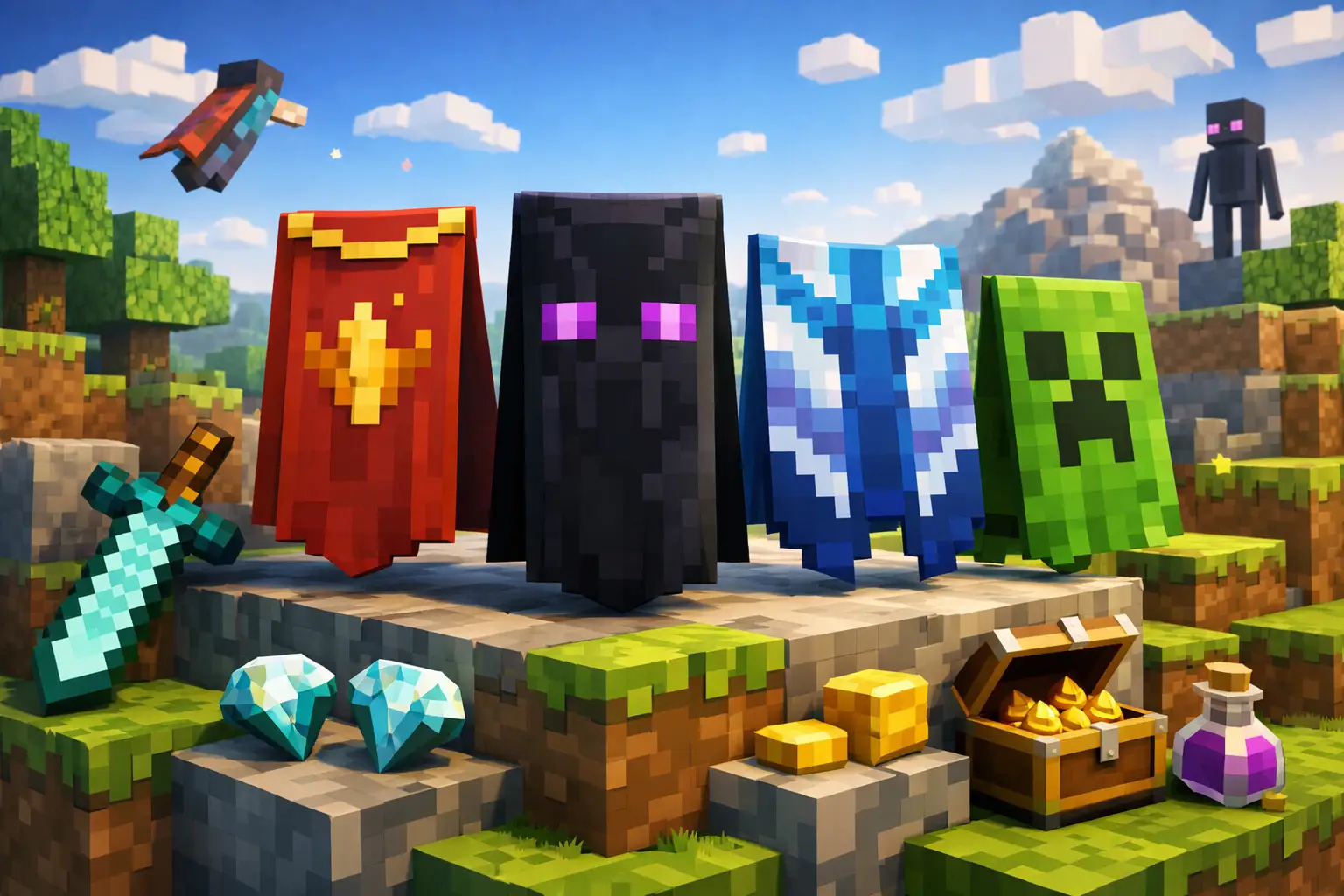
A cape is only a few pixels wide in Minecraft, but collectors know what it signals. It can mark a convention attended years ago, a limited promotion claimed on time, or a legacy account with a story behind it. This Minecraft cape list breaks down the official cape categories that matter, how they were earned, and what to check before you chase one.
The first rule is simple: rarity and availability are not the same thing. Some capes are permanently attached to the accounts that earned them. Others originated as redeemable codes, which can carry collector value when they remain unused and valid. Knowing the difference protects you from buying something that cannot actually be transferred to your account.
Minecraft Cape List: The Main Official Categories
Minecraft has issued capes through events, account milestones, promotions, creator campaigns, and special community moments. Not every official cape has the same market status, but each category tells you a lot about where a cape came from and whether it is realistically collectible.
Minecon and Minecraft Live event capes
The most recognizable legacy capes are tied to Minecon events. Attendees at select Minecon conventions received capes associated with the year they attended, including designs commonly known by collectors as the 2011, 2012, 2013, 2015, and 2016 Minecon capes. These are prestige pieces because the original eligibility window is closed and the capes are generally account-bound.
That distinction matters. An old Minecon cape seen in-game may be genuine, but the account wearing it is not the same thing as a transferable official cape code. Be especially cautious around offers that sell full accounts or claim a cape can be moved from one account to another. Official capes are tied to a Microsoft account after redemption, and account ownership transfers create avoidable security and recovery risks.
Minecraft Live has also used capes to reward participation and viewing in certain years. These campaigns tend to have shorter claim windows, so they create a different kind of scarcity: not necessarily the oldest cape, but one missed by players who were not following the event at the right time.
Migration and account milestone capes
The Migrator Cape was issued to eligible Java Edition players who completed the Mojang-to-Microsoft account migration during the program period. It is a major modern legacy cape because it represents a one-time transition in Minecraft account history.
Like most milestone rewards, it is not a standard retail item. It was granted directly to qualifying accounts, not released as a general-purpose code. For collectors, that makes it a strong status cape but not usually a cape to pursue through legitimate code marketplaces.
The Vanilla Cape is another account-history reward. It was granted to players who owned both Minecraft Java and Bedrock editions under the relevant eligibility conditions. Its value comes from broad recognition and a clean, classic design, even though it was earned through ownership rather than a physical event.
Promotional code capes
Promotional capes are often the most relevant category for buyers looking for an official code. These capes can be distributed through brand partnerships, retailer promotions, limited bundles, or regional campaigns. When a promotion provides an unused code, the code can be redeemed by the buyer and then becomes permanently associated with that buyer’s account.
The important word is unused. A code may look authentic, come in original packaging, or be tied to a real promotion and still be worthless if it was redeemed previously. A verified listing should clearly identify the cape, explain the code format or redemption path, and confirm that the code has not been claimed.
Promotional availability can also be regional. A code issued for a campaign in one territory may have redemption restrictions elsewhere, or its terms may change after the promotion ends. Read the listing details before checkout rather than assuming every official code works the same way.
Creator, platform, and social campaign capes
Minecraft has run limited campaigns connected to platforms and community participation. The Twitch and TikTok capes are well-known examples from promotional drops, while the Cherry Blossom Cape was tied to a themed event and Bedrock participation. These releases brought more players into cape collecting because they were visible, time-limited, and easier to claim than convention rewards.
That accessibility does not mean every campaign cape is permanently easy to obtain. Once a claim period ends, unredeemed codes and remaining inventory become the point of interest. Collectors should separate the original campaign from the aftermarket reality: a cape that was free during a short promotion can still become difficult to find later.
Anniversary and special-edition capes
Anniversary celebrations are where Minecraft often mixes nostalgia with broad community participation. The 15th Anniversary Cape, for example, was connected to Minecraft’s 2024 celebration and was made available through a limited redemption campaign. Capes from major anniversaries can become memorable collection pieces because they represent a specific point in the game’s history rather than a recurring event.
Some special-edition capes are available on both Java and Bedrock, while others are limited to one ecosystem or require different redemption steps. Do not rely on screenshots alone. Confirm exactly which edition receives the cosmetic and whether the code or promotion supports your account type.
How to Tell Which Capes Are Actually Collectible
A useful cape list is not just a list of names. It should tell you whether the cape is account-bound, code-based, currently claimable, or permanently retired. That is the difference between admiring a cape and making a smart purchase decision.
Account-bound capes are attached to the account that earned them. They may be rare, but they are not safely transferable as cosmetics. Code-based capes begin as redeemable codes and can be collectible before redemption, provided the code is official, valid, and unused. Retired campaign capes may still appear as unredeemed code inventory, but supply can be limited and prices can move quickly.
There is also a practical collector trade-off. The rarest cape is not automatically the best first purchase. A highly recognizable code cape with a clear redemption process may offer more confidence and immediate enjoyment than chasing a legendary account-bound design through risky channels.
What to Check Before Buying a Minecraft Cape Code
Before paying for any digital cape, verify the source, delivery method, and redemption expectations. A trustworthy seller should be able to state the exact cape being sold, whether it is an official redeemable code, and how delivery will occur. For digital inventory, instant email delivery is useful, but it should be paired with clear fulfillment tracking and support if a code has a redemption issue.
Avoid listings built around vague language such as “cape access,” “guaranteed account,” or “random rare cosmetic.” A real collector listing should not make you guess what you are receiving. It should also never require you to hand over your Microsoft login, buy an account, or trust a seller who cannot explain whether the reward works on Java, Bedrock, or both.
Secure payment processing matters as much as cape authenticity. Using a storefront with established checkout protection gives you a cleaner record of the transaction than an informal direct-message deal. At MineCapes.gg, the focus is verified official cape listings, secure Stripe checkout, and email code delivery so buyers can redeem without the uncertainty that follows unverified peer-to-peer offers.
Redeeming Without Losing the Value
Once you receive a legitimate code, redeem it only on the official Minecraft or Microsoft redemption flow specified for that promotion. Use the account you intend to keep. After a cape is redeemed, it is generally bound to that account, so there is no practical undo button if you use the wrong login.
Save the order confirmation, original code email, and redemption confirmation until you have verified the cape appears correctly. Depending on the cape and edition, it may show in the Java skin selector, the Bedrock Dressing Room, or both after the account syncs. If it does not appear immediately, check that you redeemed it on the correct Microsoft account before assuming the code failed.
A strong collection is not built by chasing every cape at once. Start with a design you genuinely want to wear, confirm the code is official and unused, and keep your redemption records. The best cape is the one that lands on your own account with a clear history and no questions attached.