
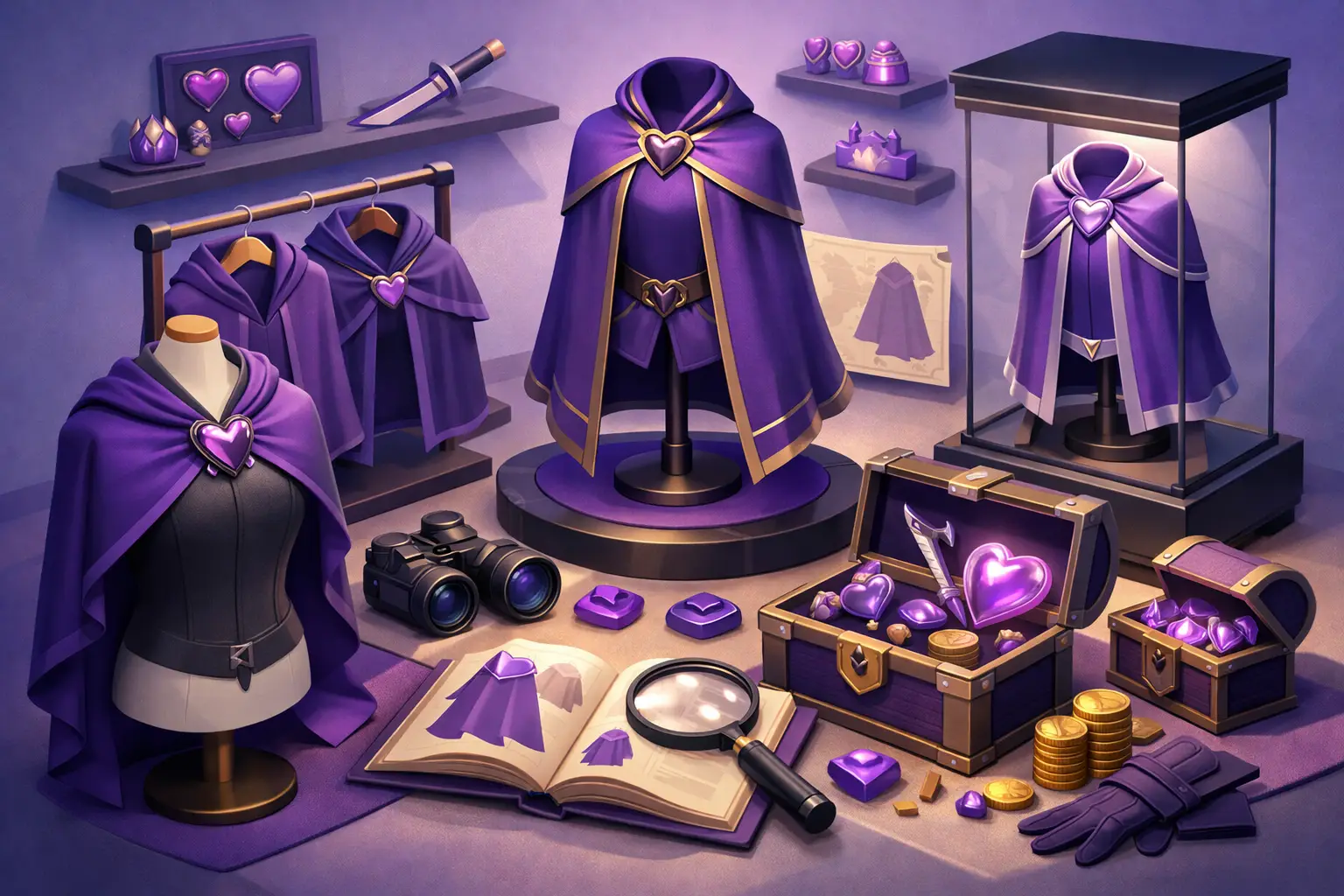
A purple hearts cape can look like a simple cosmetic from across a Minecraft server. To collectors, it is more than a back-slot design. The name, distribution method, redemption status, and account history all affect whether a cape is a real collectible, a redeemable opportunity, or a listing that deserves more questions before money changes hands.
For rare Minecraft cosmetics, the visual is only one part of the value. A cape’s real appeal comes from scarcity and provenance: why it exists, who could receive it, and whether it can still be added to a player’s account. That is why buyers should treat a purple hearts cape with the same care they would give any limited Minecraft code.
Why the Purple Hearts Cape Draws Attention
Cape collecting sits at the intersection of Minecraft history and digital identity. Unlike most skins, official capes are not freely available through the standard character creator. They tend to be tied to events, promotions, platform activity, migrations, community recognition, or limited code distributions. When a cape has a memorable name or a distinctive design, it attracts attention quickly.
The purple hearts cape search term can also create confusion. Collectors may use it to describe a cape with purple heart imagery, refer to a specific named cape, or search for a code they saw in a screenshot or marketplace listing. Those are not automatically the same thing. Before comparing prices, establish the exact cape identity and how it was originally issued.
That detail matters because rarity is not one-size-fits-all. A cosmetic may be rare because a promotion ended years ago, because few codes were distributed, or because recipients redeemed most of the supply. Another cape can look scarce simply because its official release status is unclear. Serious buyers separate confirmed history from rumor.
Purple Hearts Cape Verification Starts With the Source
A good listing should answer the questions that actually determine ownership. What is being sold? Is it an official unused code, an account with a cape already attached, or a claim based on an image? Can the buyer redeem it on their own eligible Minecraft account? Is there evidence that the code has not been exposed or redeemed?
An official redeemable code is generally the cleanest collectible format. It gives the buyer control over redemption and avoids the major account-transfer risks that come with buying someone else’s login. It also creates a clearer line between the seller’s delivery obligation and the buyer’s final account ownership.
Use these four checks before purchasing any rare cape code:
- Confirm the exact cape name, appearance, and original distribution context rather than relying on a vague product title.
- Verify that the item is an official redeemable code, not a generated-looking string, an account credential, or a promise of future delivery.
- Read whether redemption has platform, account, regional, or expiration requirements.
- Choose a seller that explains verification, provides a clear delivery process, and offers support if a legitimate redemption issue occurs.
Screenshots can support a listing, but they are not proof by themselves. A screenshot may show a cape on an account without proving that a fresh code exists. Likewise, a picture of a code card does not guarantee the code remains unredeemed. The value is in a valid, usable entitlement, not in an image of one.
Code Ownership Is Better Than Account Access
The fastest way to introduce unnecessary risk into a collectible purchase is to confuse account access with cape ownership. If a seller offers an account that already has a purple hearts cape attached, you are relying on the seller to surrender control permanently. That can be difficult to verify, and account recovery systems may still favor the original owner.
A valid code lets you attach the cosmetic to the account you already use. Your Minecraft identity, game progress, friends, purchases, and security settings stay under your control. For collectors who want the cape as part of a long-term collection, that distinction is significant.
There are exceptions. Some legacy capes were never distributed as codes, and collectors may discuss accounts that own them. But that does not make account trading low-risk or suitable for every buyer. It depends on the cape’s history, the platform rules, and how much risk you are willing to accept. When a legitimate code option exists, it is usually the more straightforward route.
What a Trustworthy Cape Purchase Looks Like
Rare cosmetics often create urgency. A limited listing can sell quickly, and collectors do not want to miss a design they may not see again. That urgency is understandable, but it should never replace verification. The right seller makes the basics clear before checkout instead of hiding behind phrases such as “rare account,” “instant claim,” or “DM for proof.”
Look for defined product details, secure payment processing, and a documented delivery method. Instant email delivery is useful because it gets the code into the buyer’s hands quickly, but speed only matters when the item has been verified first. A clear support path is equally valuable. If a buyer hits an eligibility issue or needs help understanding redemption instructions, they should know where to go next.
This is where specialized marketplaces have an edge over random social posts. A collector-focused storefront such as MineCapes.gg can focus on verified listings, secure checkout, and tracked fulfillment rather than leaving buyers to negotiate with an unknown seller. That does not remove the need to read the listing carefully, but it changes the purchase from a trust gamble into a defined transaction.
Price is another signal, although not a complete answer. An unusually cheap code can be tempting, especially for a cape that is difficult to find. It can also indicate a reused code, an unverified source, or a seller hoping the buyer will not know the difference between a cape code and an account screenshot. Compare what is actually included, not just the number on the checkout page.
Redeem Carefully and Keep the Record
Once you receive a valid code, redeem it promptly through the official process specified for that code. Use the Minecraft account you intend to keep long-term, and double-check that you are signed into the correct account before confirming. A successful redemption is generally permanent, which is exactly what collectors want, but it also means a mistake can be difficult to reverse.
Keep your order confirmation, delivery email, and any redemption confirmation in a secure folder. These records are useful if support needs to investigate a technical problem. They also help you document the cape’s provenance within your personal collection.
Do not share an unused code in screenshots, chat messages, or public posts. Digital codes can be copied instantly. Once another person redeems it, the loss is not theoretical. Treat a cape code like a high-value digital key until it is safely attached to your account.
Collect for the Design, Not Just the Hype
The best cape collections have a point of view. Some players prioritize older event cosmetics. Others collect capes tied to a favorite color palette, community moment, or Minecraft era. A purple hearts cape may fit because it stands out visually, complements a skin, or represents a specific release story. Those reasons are more durable than buying solely because a listing feels urgent.
Collector value can change over time. New players enter the game, old promotions become harder to find, and community attention shifts toward different designs. No rare cosmetic comes with a guaranteed future value. Buy a cape because you want to wear it, keep it, and recognize it as part of your Minecraft identity.
If you find a purple hearts cape that fits your collection, slow down long enough to confirm the code, the redemption terms, and the seller’s process. A few careful minutes are what turn a rare cosmetic purchase into an ownership decision you can feel good about every time you join a world.