
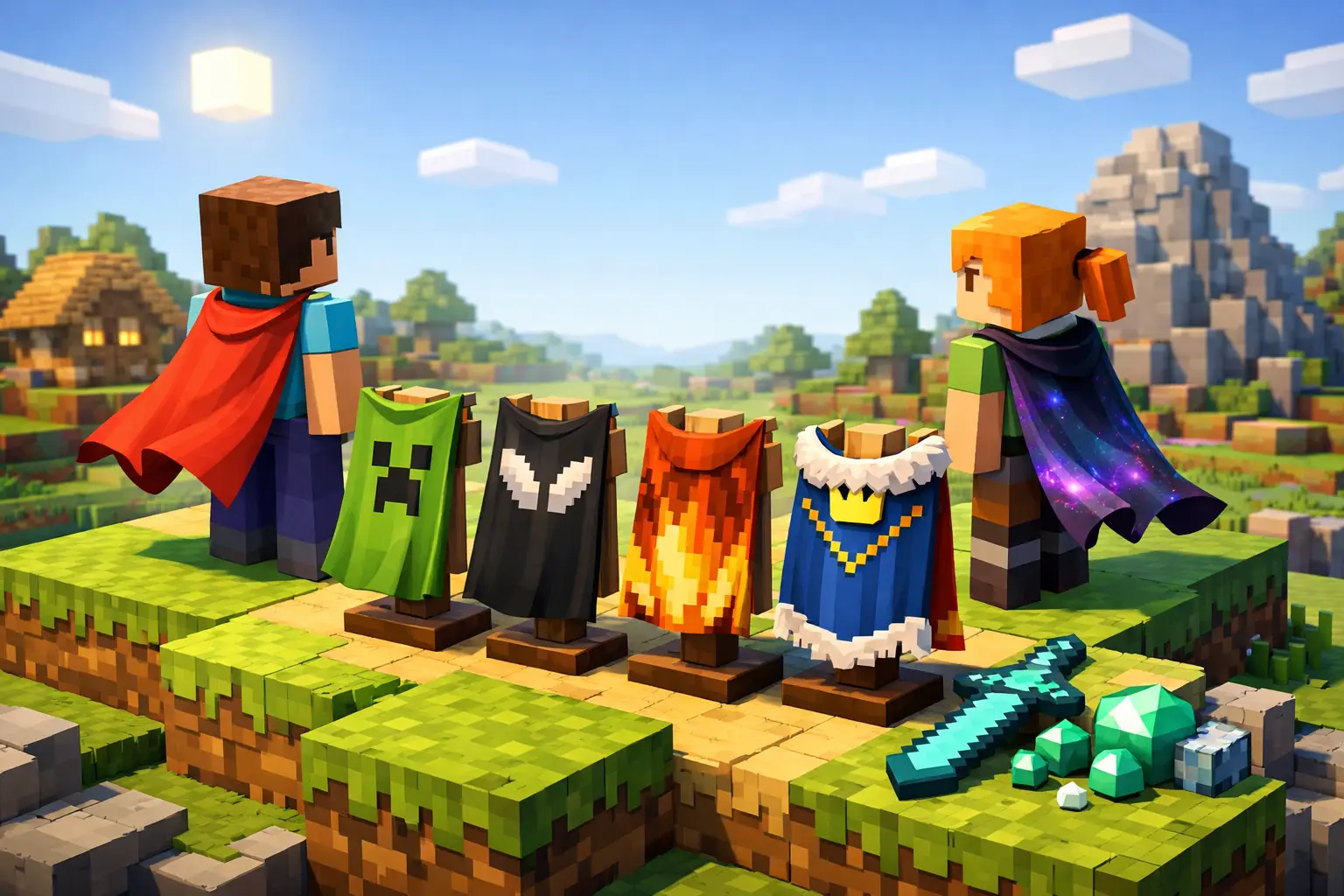
A cape still does something almost no other Minecraft cosmetic can do – it gets noticed instantly. Skins are personal, but capes are public status. That is why interest in minecraft capes 2026 is not slowing down. If anything, the market is getting sharper: buyers care more about legitimacy, collectors care more about provenance, and casual players are finally realizing that not every cape is equally obtainable, redeemable, or worth chasing.
Why minecraft capes 2026 feels different
The cape market used to be easier to read. You either had a famous legacy cape, an event cape, or you did not. In 2026, the picture is more layered. Some capes are desirable because they are tied to specific moments in Minecraft history. Others matter because they are harder to source as official redeemable codes. And some get attention simply because most players will never own one through normal gameplay.
That last point matters. A lot of buyers are no longer looking for just any cape. They want a cape with a story, a limited distribution path, and clean redemption confidence. The difference between a collectible and a risky purchase usually comes down to one thing: whether the code or entitlement is verifiable before money changes hands.
For collectors, that makes 2026 less about hype and more about filtering. The strongest demand is moving toward official code-based capes and clearly documented inventory. Random seller claims are weaker than they used to be, because buyers have seen enough sketchy listings to know that scarcity alone is not proof.
What makes a cape valuable in 2026
Value is not just rarity. In this niche, rarity without trust can actually drag value down. A cape becomes more attractive when it checks three boxes at once: limited availability, clear legitimacy, and smooth redemption.
The first factor is obvious. If very few units were distributed, demand tends to stay high. But limited supply only helps if buyers believe the item can be redeemed and used as promised. That is where authenticity starts shaping price more than raw scarcity.
The second factor is legitimacy. Official redeemable codes carry a different weight than vague account-based offers or unverifiable access promises. Collectors are paying for ownership confidence as much as they are paying for the cosmetic itself. If a listing cannot clearly establish what is being sold and how it is redeemed, serious buyers move on.
The third factor is fulfillment quality. Instant digital delivery, tracked fulfillment, and support for redemption issues sound basic, but in the cape market they directly affect perceived value. A rare item with a messy delivery process feels riskier than a similar item backed by verified inventory and a clean handoff.
The capes buyers are actually chasing
Not every cape gets equal attention, even if all capes feel exclusive to newer players. In practice, demand clusters around a few categories.
Legacy and event-linked capes still sit near the top because they represent a specific chapter of Minecraft culture. These are not just cosmetics. They are markers of participation, timing, and digital history. That emotional layer matters more than some people expect, especially for longtime players who care about account identity.
Official code-based capes also stay strong because they create a cleaner buying experience. There is less ambiguity around what the buyer receives. For many shoppers, especially gift buyers and first-time collectors, that simplicity is worth paying for.
Then there is the social-value category. Some capes are wanted not because they are the rarest on paper, but because other players recognize them immediately. Prestige inside multiplayer spaces is not always tied to technical scarcity. Recognition matters. A cape that gets noticed in a lobby can outperform a cape that is obscure but rarer.
Where buyers get burned
The biggest mistakes in minecraft capes 2026 are still the old ones: trusting screenshots, assuming every “official” claim is true, and chasing the cheapest listing instead of the safest one.
Screenshots prove almost nothing on their own. A redeemed cape image, an account inventory image, or a cropped transaction shot does not guarantee that a buyer will receive a valid, usable code. The more desirable a cape is, the more careful a buyer has to be about how proof is presented.
Price is another trap. If a listing is far below market, there is usually a reason. Sometimes it is a misleading product format. Sometimes it is inventory that is not actually verified. Sometimes it is a seller counting on buyer inexperience. Cheap can become expensive fast if the code fails, support disappears, or the listing terms were vague from the start.
There is also confusion around account sales versus official code sales. These are not interchangeable. Buyers who want a cleaner ownership path usually prefer official redeemable codes because they reduce ambiguity. Account-based transactions can introduce extra friction, extra uncertainty, and less confidence long term.
How smart buyers evaluate cape listings
Collectors who stay safe tend to ask a simple set of questions before checkout. What exactly is being delivered? Is it an official redeemable code? Has the inventory been verified before listing? How is delivery handled? And what happens if there is a redemption issue?
Those questions cut through most of the noise. A strong listing should explain the product format clearly and remove guesswork. If the listing language is vague, overly broad, or dodges redemption details, that is not a minor issue. It is the issue.
Fulfillment speed also matters more than people think. Instant email delivery is not just a convenience feature. It signals that the seller has an organized process and that the transaction flow is built for digital goods rather than improvised after purchase.
Support is another part of trust. Rare cosmetics attract buyers who care about the final result, not just the checkout moment. If something goes wrong during redemption, responsive support can be the difference between a stressful purchase and a recoverable one.
Minecraft capes 2026 for collectors vs casual buyers
Collectors and casual buyers do not shop the same way, and that affects what “best” means.
Collectors usually care about long-term desirability, category significance, and how clean the ownership trail feels. They are more likely to compare listings, track price movement, and avoid anything that looks uncertain. For them, the right cape is not just visually appealing. It has to fit a broader collection logic.
Casual buyers are more likely to focus on recognition and immediacy. They want a cape that feels special, looks strong in-game, and arrives without hassle. They are less interested in market nuance and more interested in avoiding scams while getting something clearly more exclusive than ordinary cosmetics.
Gift buyers are a category of their own. They usually want the least confusing path possible. Verified official code listings, secure checkout, and instant delivery matter even more here because the buyer may not be deeply familiar with redemption details. Clarity wins.
Why verification is the real premium
In a niche like this, verification is not a nice extra. It is the premium feature.
Any seller can say a cape is rare. Fewer can prove the item being sold is legitimate, properly categorized, and ready for redemption. That is why verified marketplaces stand apart from informal resale spaces. The product may look similar at first glance, but the buying risk is not similar at all.
A marketplace focused specifically on official cape codes has an advantage because it understands what buyers actually need reassurance on. Not generic ecommerce language. Specific trust signals: verified listings before publication, secure payment handling, instant code delivery, and support tied to redemption outcomes. That is the difference between browsing and buying.
For buyers comparing options in 2026, this is where a specialist platform like MineCapes.gg fits naturally. The appeal is not just access. It is access with less uncertainty, which is exactly what the cape market needs.
Should you buy now or wait?
That depends on the cape and your reason for buying it.
If you are chasing a specific official code-based cape with proven demand, waiting is not automatically safer or cheaper. Limited digital collectibles do not always reward patience, especially when supply is fixed and buyer confidence around verified inventory keeps improving.
If you are still figuring out what kind of cape fits your goals, waiting can help. Some buyers jump too early on a cape that is simply available, then realize they wanted something more recognizable, more historically meaningful, or easier to explain as part of a collection.
The better move is to buy when three things line up: you know why you want that cape, the listing is clearly verified, and the redemption path is straightforward. That is a stronger signal than trying to perfectly time the market.
A good cape purchase should feel sharp, not lucky. In 2026, the smartest buyers are not just hunting rarity. They are buying confidence with it.