
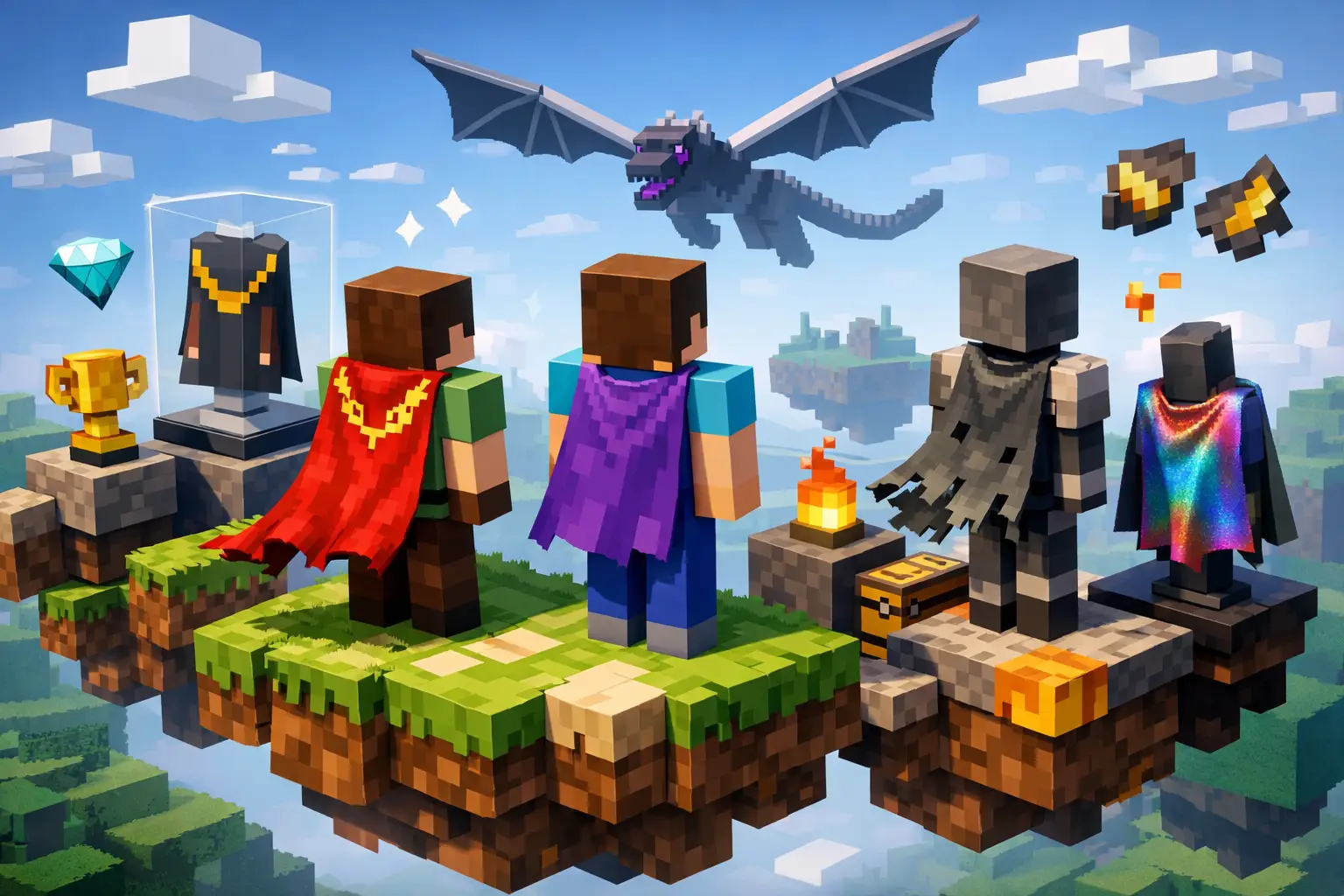
Spotting a cape in a crowded lobby still means something. In a game packed with skins, textures, and custom cosmetics, minecraft capes remain one of the few status items that instantly signal history, rarity, or access. They are simple by design, but that simplicity is exactly why they stand out. If you care about digital identity in Minecraft, capes sit in a category of their own.
Why minecraft capes still matter
Not every cosmetic in Minecraft has collector gravity. Most skins are easy to change, and many server-side cosmetics only matter in one place. Capes are different because they carry platform-level visibility and long-term prestige. When a player equips an official cape, it is seen as part of the account’s identity, not just a temporary style choice.
That is what makes capes more than decoration. Some represent specific events, migration milestones, creator programs, or limited promotional campaigns. Others are tied to older moments in Minecraft history that newer players only know through screenshots and community lore. The result is a cosmetic category shaped by scarcity, provenance, and recognition.
For collectors, that combination matters. A rare cape is not just about looking good in motion. It is about owning a piece of Minecraft history that other players recognize immediately.
The real value behind rare Minecraft capes
A cape’s value usually comes from three things – how it was originally distributed, how limited it was, and whether a legitimate redemption path still exists. That last part matters more than many buyers realize.
Some capes are famous because very few accounts ever received them. Others became desirable because they were available only for a short window or through a narrow qualification path. In both cases, demand tends to outlast the original event. Players who missed the opportunity often spend years watching the market, waiting for a verified chance to get one.
But rarity alone does not create buyer confidence. In this niche, legitimacy is what separates a serious collectible from a risky listing. If a cape cannot be traced to an official redeemable code or a credible issuance method, the whole transaction starts to look shaky. That is why experienced buyers care about verification, redemption support, and tracked delivery just as much as the cape itself.
Official codes vs risky alternatives
The biggest mistake new buyers make is treating all cape listings as equal. They are not. In the cape market, how the item is delivered is part of the product.
Official redeemable codes are the standard serious buyers look for because they offer a clearer path to legitimate ownership. You are not relying on vague promises, account-sharing arrangements, or off-platform trust games. You receive a code, redeem it through the proper process, and attach the cosmetic to your own account where applicable. That is cleaner, safer, and much easier to evaluate before purchase.
Risk goes up fast when sellers get vague. If a listing avoids explaining delivery, cannot confirm whether the code is official, or pushes buyers into informal payment methods, that is a bad sign. The same goes for offers that seem dramatically under market value. Sometimes a deal is just a deal, but in a category built around rare digital goods, unrealistic pricing usually means missing information or elevated fraud risk.
This is where specialized marketplaces have an edge over casual peer-to-peer channels. Verification before publication, secure payment processing, and clear fulfillment tracking reduce the uncertainty that makes collectors hesitate. In a trust-sensitive market, that is not a bonus feature. It is the product.
Which minecraft capes get the most attention?
Collector interest usually clusters around event capes, legacy capes, and promotion-linked capes. Each category attracts a slightly different buyer.
Event capes appeal to players who care about visible history. These capes often connect to a real-world moment, a convention, or a limited community milestone. Their value comes from both scarcity and story. If a cape marks a specific era of Minecraft culture, collectors tend to see it as more than a cosmetic.
Legacy capes have a different pull. They often attract longtime fans who want something tied to an earlier phase of the game’s evolution. These buyers are not always chasing the flashiest item. Sometimes they want a cape that feels authentic to their years in the community.
Promotional capes tend to bring in a broader mix of buyers. Some people want them because they are hard to find, while others just like the design and the fact that they still carry official recognition. The trade-off is that not every promo cape holds the same collector status over time. Some stay desirable because supply stays tight. Others cool off once the initial hype fades.
That is why cape value is never just about aesthetics. A good-looking cape can be popular, but a good-looking cape with a clear origin and limited distribution becomes collectible.
How to judge a cape listing before you buy
A strong listing should answer the questions serious buyers already have. What cape is it exactly? Is the code official? How is it delivered? Is there proof of verification before sale? What happens if the buyer needs help redeeming it?
If those answers are missing, the friction is not accidental. It usually means the seller is asking you to trust details they have not earned the right to leave vague.
Price is another signal, but it has to be read in context. The cheapest listing is not automatically the best listing, especially with digital collectibles. A lower price can be attractive, but if it comes without secure checkout, fulfillment transparency, or redemption guidance, you may be paying less for a much weaker buying experience.
Experienced buyers usually prefer a cleaner transaction over a marginal discount. Fast email delivery, reputable payment processing, and support for redemption issues all add value because they reduce the chance of a failed or disputed purchase. For a collectible item, peace of mind is part of the total cost.
Why verification changes the buying experience
Verification sounds like a simple trust badge, but in practice it changes the whole transaction. It tells buyers that the inventory has been checked before it hits the storefront, not after a dispute starts. That matters because cape buyers are usually not impulse buyers. Even when they move quickly on a rare item, they are still evaluating risk.
A verified marketplace creates a more professional buying environment. The listing feels clearer. The checkout feels safer. The delivery expectation is defined. And if something goes wrong, there is an actual support structure instead of a disappearing username.
That is especially important for gift buyers and mainstream players entering the cape market for the first time. They may understand that capes are prestigious, but they do not always know the red flags. A specialized storefront narrows the gap between collector-level products and first-time buyer confidence.
For that reason, platforms like MineCapes.gg are not only selling access to rare cosmetics. They are reducing the uncertainty around ownership, authenticity, and fulfillment in a niche where those concerns directly affect demand.
Redemption matters almost as much as rarity
A cape can be desirable and still become a frustrating purchase if redemption is unclear. This is one of the more overlooked parts of the market. Buyers often focus on rarity first and process second, but a poor redemption experience can ruin the excitement fast.
Clear guidance matters because not every buyer is deeply familiar with how official codes are redeemed. Some are collectors returning to the game after years away. Others are buying a gift for someone who has wanted a cape for a long time. In both cases, simple instructions and support reduce friction at the exact moment when trust needs to hold.
This is also where instant delivery becomes more than a convenience feature. When a code arrives quickly by email and the buyer can move straight into redemption, the purchase feels complete. Delays create doubt. Fast fulfillment reinforces legitimacy.
The market is emotional, but the purchase should be rational
That tension defines minecraft capes better than almost anything else. People want them for emotional reasons – prestige, nostalgia, identity, flex value. But the best purchases happen when buyers slow down and treat the transaction like any other high-trust digital collectible purchase.
Ask where the cape came from. Ask how delivery works. Check whether the payment process is secure. Make sure support exists if redemption gets stuck. If a seller cannot satisfy those basics, the rarity stops mattering.
The strongest cape purchases are the ones that feel good before and after checkout. You get the collector appeal, but you also get the confidence that the item is real, the code is official, and the ownership path makes sense. That is what turns a flashy cosmetic into a satisfying acquisition.
If you are chasing a cape that actually means something, buy like a collector, not like a gambler.