
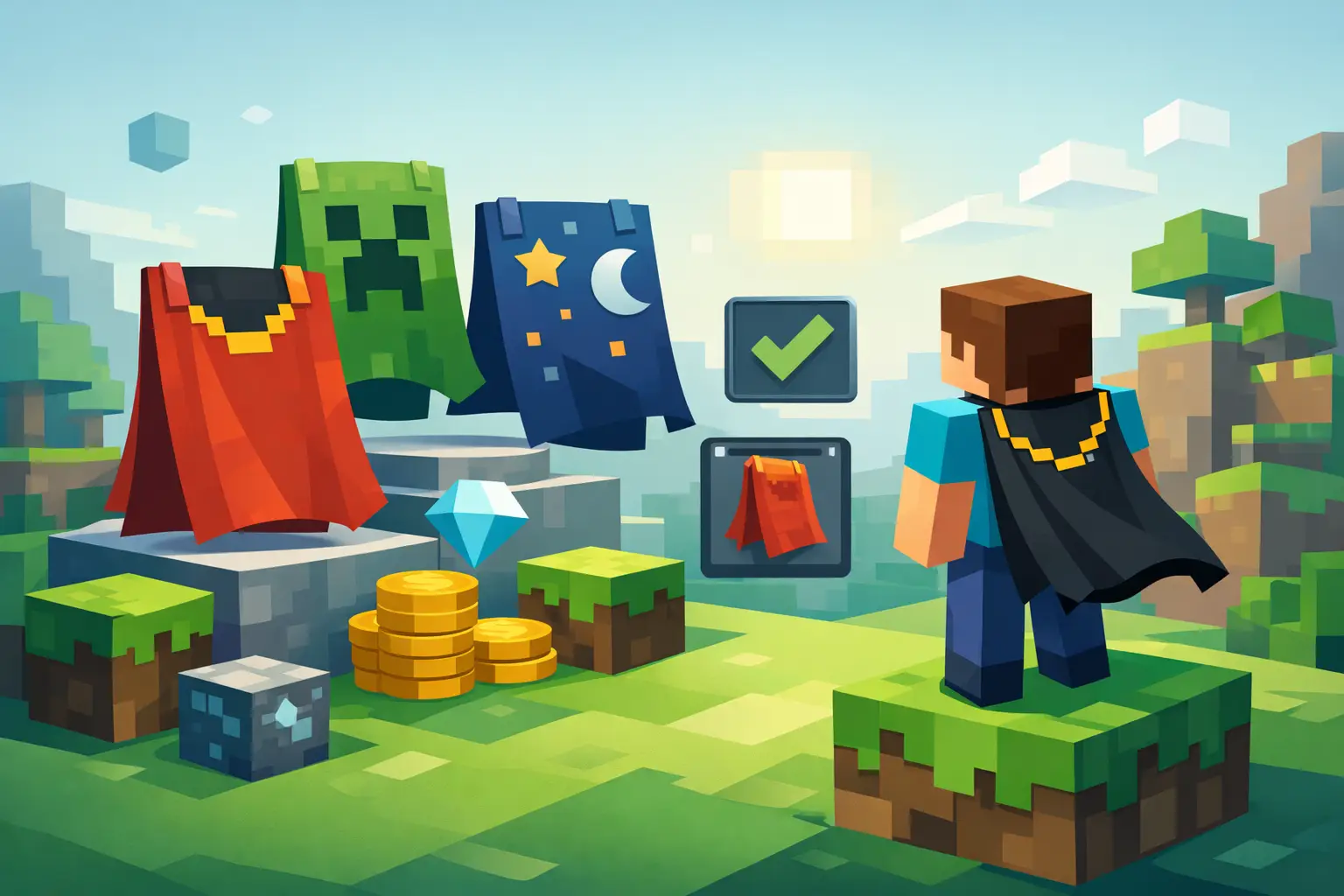
A rare cape can change how your account feels the second you log in. It is not just a cosmetic – for a lot of players, it is proof of history, status, and taste. That is why an official Minecraft cape buying guide matters so much. When real money is involved and supply is limited, the gap between a clean purchase and a bad one usually comes down to verification.
Why cape buyers get burned
Most problems in the cape market are not caused by capes themselves. They come from messy selling channels, vague listings, and buyers who assume every code is equal. It is easy to see a screenshot, a low price, and a seller saying the code is “unused” and think that is enough. It is not.
Official cape codes are valuable because they are scarce and tied to real Minecraft history – events, promotions, special editions, and limited releases. That scarcity attracts both serious collectors and bad actors. Some sellers do not actually have the code they claim to have. Others sell codes with unclear redemption status, poor proof, or terms that make disputes almost impossible once the transaction is done.
If you care about collecting, gifting, or simply owning a cape without stress, you need to buy like a collector, not like an impulse shopper.
Official Minecraft cape buying guide – what counts as official
The first filter is simple: official means the cape comes from a legitimate Minecraft or partner distribution path, not from a mod, skin pack trick, or cosmetic overlay that only appears on certain servers or clients.
That distinction matters. A real official cape is tied to authentic redemption or ownership within the Minecraft ecosystem. It carries the prestige players actually care about because other players can recognize it in legitimate contexts. A fake or client-side substitute may look similar in a screenshot, but it does not hold the same collector value and does not deliver the same account identity.
When you are evaluating a listing, ask yourself what exactly is being sold. Is it an unused redeemable code for an official cape? Is it access to an account that already has the cape? Is it a cosmetic effect that only works in a third-party setup? Those are completely different products with completely different risk levels.
For most buyers, official redeemable codes are the cleanest category because they are direct, collectible, and easier to understand. You are purchasing the right to redeem a real cape, not inheriting someone elses account history.
How to evaluate a listing before you pay
A good cape listing should answer the questions a cautious buyer would ask before checkout. If it leaves too much room for guessing, that is already a warning sign.
Start with the identity of the cape. The listing should clearly state which cape is being sold, where it originally came from, and whether the product is a code rather than an account transfer. Serious buyers want specifics because rarity is not generic. A Cherry Blossom cape, a migration-era cosmetic, and a convention-related reward do not carry the same collector appeal or market behavior.
Next, look for verification. In this market, proof is part of the product. A trustworthy storefront verifies listings before publication and presents inventory with enough clarity that buyers know what they are purchasing. If the seller relies on casual promises instead of process, the risk goes up fast.
Price also tells a story, but not always the obvious one. A very high price does not automatically mean the cape is more legitimate. A very low price, though, should force a pause. If a rare official cape is listed well below the normal market range, there is usually a reason. Sometimes it is a rushed seller. More often, it points to uncertainty around authenticity, redemption status, or delivery.
The biggest trade-off: code purchase vs account purchase
A lot of newer buyers compare official cape codes with accounts that already have capes attached. On paper, the account can look cheaper. In practice, it often comes with more baggage.
Buying an account means inheriting login history, account security risk, and potential recovery issues. Even if the transfer appears smooth, there is always a question about long-term control. That is especially true in digital goods categories where original ownership can matter later.
Buying an official redeemable cape code is usually cleaner because the asset is the code itself. Once redeemed properly, the cape becomes part of your own account story. For collectors and gift buyers, that is a stronger ownership experience. It may cost more depending on the cape, but the reduction in uncertainty is often worth it.
Official Minecraft cape buying guide – red flags to watch for
Some warning signs are obvious, and some only look obvious after a buyer gets burned. The most common red flag is weak proof. If the seller cannot explain the cape source, code status, or delivery method in plain language, move on.
Another issue is untracked fulfillment. Digital goods can be delivered instantly, but that does not mean delivery should feel random. You want a clear record of purchase, payment confirmation, and fulfillment timing. That helps if anything goes wrong and gives the transaction the structure informal deals usually lack.
Be careful with sellers who pressure you into off-platform payment methods or private messaging deals. In a market built on trust, secure checkout matters. So does support. If there is no real path for help after purchase, the low-friction deal can become a high-friction problem fast.
Finally, watch for vague language around redemption. “Should work” is not the same as verified. “I think it is unused” is not the same as confirmed. A premium collectible should not come with bargain-bin certainty.
What a safer buying process looks like
The strongest cape buying experience is not just about having inventory. It is about reducing the places where a transaction can fail.
That means verified listings before they go live, secure payment processing, and fast code delivery with a paper trail. It also means the buyer gets clarity on what happens next. If the code arrives instantly by email, that saves time, but speed only matters when it comes with trust. Fast delivery without verification is just faster risk.
This is where a specialized marketplace has a real edge over scattered peer-to-peer channels. A focused store built around official Minecraft capes can structure the entire purchase around confidence: known product type, known delivery method, known support path. That is a much better fit for collectors than hoping a random seller follows through.
Redemption matters more than buyers expect
A legitimate purchase is only half the process. Redemption is where buyers either feel the payoff immediately or realize they did not understand what they bought.
Before purchasing, make sure you know how the cape is redeemed and what account you plan to use. If the product is an official code, the redemption path should be straightforward and clearly explained. You should not be improvising after checkout.
This matters even more for gift buyers. A cape code can be a strong gift because it feels rare and personal, but only if the recipient can redeem it without confusion. If you are buying for someone else, double-check whether they play on the right ecosystem, whether they understand code redemption, and whether timing matters for the occasion.
Who should buy now, and who should wait
Not every buyer needs to move immediately. If you already know the exact cape you want and you are buying from a verified source, waiting can simply mean missing available inventory. Rare cosmetics do not behave like mass-market items. Stock is limited, and once a specific code is gone, the next one may not appear quickly or at the same price.
On the other hand, if you are still figuring out whether you want a collectible for prestige, nostalgia, or gifting, take a beat. The right purchase depends on your goal. Some buyers want the rarest possible cape. Others want a recognizable official cosmetic with cleaner affordability. Collector value is not one-size-fits-all.
That is the part many guides miss. The best cape is not always the most expensive one. It is the one that matches your reason for buying and comes with the least doubt around legitimacy.
Buying with collector standards
If you treat a cape like a throwaway cosmetic, you will shop on price alone and probably accept too much risk. If you treat it like a collectible, your standards change. You care about source, proof, redemption, delivery, and ownership quality.
That is the mindset serious buyers bring to the market, and it is why specialized platforms like MineCapes.gg exist in the first place. Verification, secure Stripe checkout, instant email delivery, and support are not extras in this category. They are the difference between buying a rare status item and gambling on one.
A cape worth owning is worth buying carefully. The smartest move is not chasing the loudest listing – it is choosing the purchase path that lets you redeem with confidence and actually enjoy what you paid for.