
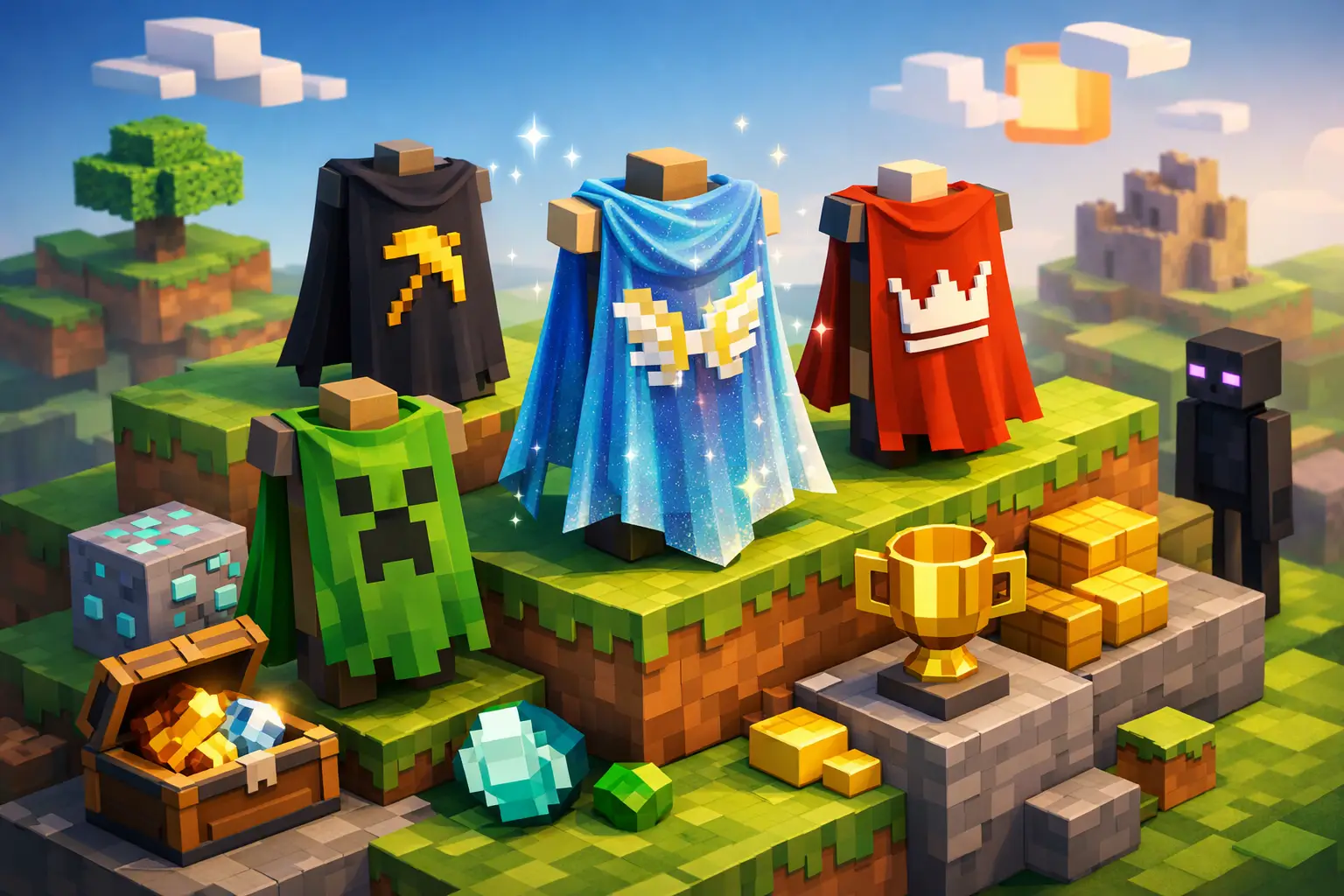
A cape takes up only a small space on a Minecraft character, but the right one can say more than a full set of enchanted netherite. Rare Minecraft capes signal history: a convention attended years ago, a limited promotion claimed at the right moment, or a community event that will not be repeated. For collectors, that combination of visibility, scarcity, and provenance is exactly what gives a digital cosmetic real status.
Not every cape is rare, and not every rare cape is equally desirable. The difference comes down to how it was issued, whether it can still be redeemed, and how much meaning the Minecraft community attaches to it. Understanding those details matters before you chase a listing or add a new piece to a collection.
Why Rare Minecraft Capes Carry So Much Weight
Capes are among Minecraft’s most recognizable cosmetics because they are immediately visible in third-person play, screenshots, server hubs, and multiplayer events. Unlike a skin, which can be changed in seconds, an official cape is tied to an account and generally represents a specific moment in Minecraft history.
The strongest collector appeal usually comes from limited distribution. A cape may have been tied to a particular event, a short promotional window, a one-time code drop, or a legacy program. Once that path is closed, demand remains while the supply of legitimate, unredeemed codes becomes smaller. That does not make every old cape automatically valuable, but it creates the conditions collectors care about.
Recognition matters just as much as scarcity. Some capes are instantly familiar to longtime players and carry a reputation built over years. Others may be technically limited but less sought after because few players recognize them. A collector buying for personal satisfaction may prefer the design itself. A collector building a high-profile inventory will usually care about both the cape’s look and its place in the wider community.
There is also a practical distinction between an account that happens to own a cape and an official, unredeemed cape code. Account transfers introduce major ownership and recovery risks. A code, when valid and redeemed through the official process, lets the buyer apply the cosmetic to their own account. For anyone serious about long-term ownership, that difference is not minor.
What Determines a Cape’s Collector Value?
A cape’s price and desirability are not fixed by a single chart. They move with availability, community attention, and confidence in the item’s origin. Still, four factors consistently separate a meaningful collectible from a cosmetic that only looks rare at first glance.
Original distribution and event history
Start with the cape’s story. Was it issued for a major Minecraft event? Was it a regional promotion, a partnership item, or a reward for a limited activity? The narrower and more verifiable the original distribution, the stronger its collector case tends to be.
Event capes often have an advantage because they connect ownership to a real chapter of Minecraft culture. They are not just visual effects. They are reminders of a specific era, convention, update cycle, or community moment. That history makes the cape easier to explain, recognize, and value.
Redeemability and code status
An official code is only useful if it is unredeemed and valid for the intended redemption flow. This is the most important practical checkpoint for buyers. A rare cape name means nothing if the code has already been claimed, cannot be verified, or is being sold without clear delivery terms.
Be cautious with vague descriptions such as “cape access,” “account with cape,” or “guaranteed working” without details about the code. A legitimate marketplace should communicate what is being sold, how delivery works, and what support is available if a redemption issue occurs. Verification before a listing goes live is a meaningful layer of protection, especially in a category that attracts impersonators and reused codes.
Visual identity and community demand
Some capes become collector favorites because their design is unmistakable. Strong colors, clean iconography, and an association with a famous event can make a cape feel more prestigious in-game. Other capes are quieter but appeal to collectors who value obscurity and legacy over instant recognition.
This is where personal preference changes the equation. A cape that fits your skin, server persona, or favorite Minecraft era may be worth more to you than a more famous alternative. There is no wrong way to collect, but buyers should separate personal value from resale assumptions. Digital collectibles can be desirable and still fluctuate in demand.
Supply that is actually available
“Limited” is not the same as scarce on the active market. A cape could have had a small original release but still have a number of unredeemed codes circulating. Conversely, an item with a broader initial distribution may be hard to find years later because most codes were redeemed or lost.
The supply that matters is the number of credible, available codes at a given time. That is why collectors should compare listings carefully rather than reacting to the first price they see. If a deal looks dramatically cheaper than the rest of the market, the missing detail is often authenticity, code status, or fulfillment reliability.
How to Buy Rare Minecraft Capes Without Guesswork
The rare-cape market rewards patience more than impulse. The goal is not merely finding a cape name you like. It is buying a legitimate code with a clear path to ownership on your own account.
First, identify the exact cape you want and learn its original release context. Knowing whether it came from an event, promotion, or legacy distribution helps you spot descriptions that do not add up. It also keeps you from paying a premium for a cape that is less limited than it appears.
Next, prioritize sellers that deal in official redeemable codes rather than account credentials. You should know whether the code is verified, how it will be delivered, and what happens if there is a redemption problem. Instant email delivery is convenient, but it should be paired with order tracking and real support, not used as a substitute for trust.
Secure checkout matters too. A clear storefront with established payment processing gives buyers a better record of the transaction than an informal direct-message deal. MineCapes.gg is built around this collector-first model, with verified cape listings, Stripe-secured checkout, tracked fulfillment, and support for redemption questions.
Finally, redeem the code promptly using the stated official instructions and save your order information. Waiting unnecessarily creates avoidable uncertainty. Once redemption is complete, confirm that the cape appears correctly on the account you intended to use. Your Minecraft account is the final destination, so make sure you are signed into the right one before confirming anything.
Common Mistakes That Cost Collectors
The biggest mistake is treating a cape like any other downloadable cosmetic. Official capes have a limited history and a specific redemption path. If a seller cannot explain what is being delivered, that is a reason to stop, not a reason to rush.
Another mistake is buying an account instead of a code because it seems cheaper or easier. Accounts can be recovered by their original owner, may violate platform rules, and leave the buyer without clean ownership. A valid code redeemed directly to your account is the more collector-friendly route when it is available.
Collectors also get burned by focusing only on rarity claims. Screenshots can be copied, cape names can be misused, and “one of one” language can be pure hype. Look for concrete details: the cape’s release history, code condition, delivery method, and the seller’s process for handling a failed redemption.
Do not confuse urgency with proof. Rare inventory can move quickly, but a legitimate purchase should still give you enough information to make a confident decision. The best listings make the important details easy to understand before checkout.
Building a Collection You Will Actually Enjoy
The most satisfying cape collections have a point of view. You might focus on convention history, promotional releases, a favorite color palette, or capes tied to the era when you started playing. A collection built around your own Minecraft story stays meaningful even when community attention shifts.
It also helps to set a budget before you start. Highly desirable capes can command serious prices, and there will always be another listing that looks tempting. Decide whether you are collecting for display, nostalgia, prestige, or completion. Your answer should shape what you buy and what you skip.
A rare cape is a visible piece of Minecraft history, but it is still meant to be worn. Choose the ones that make logging in feel a little more personal, then make sure the route to ownership is as legitimate as the cosmetic itself.